All 10 Disney Renaissance Movies, Ranked (2026)
All 10 Disney Renaissance movies ranked — from the forgotten gem to the king.

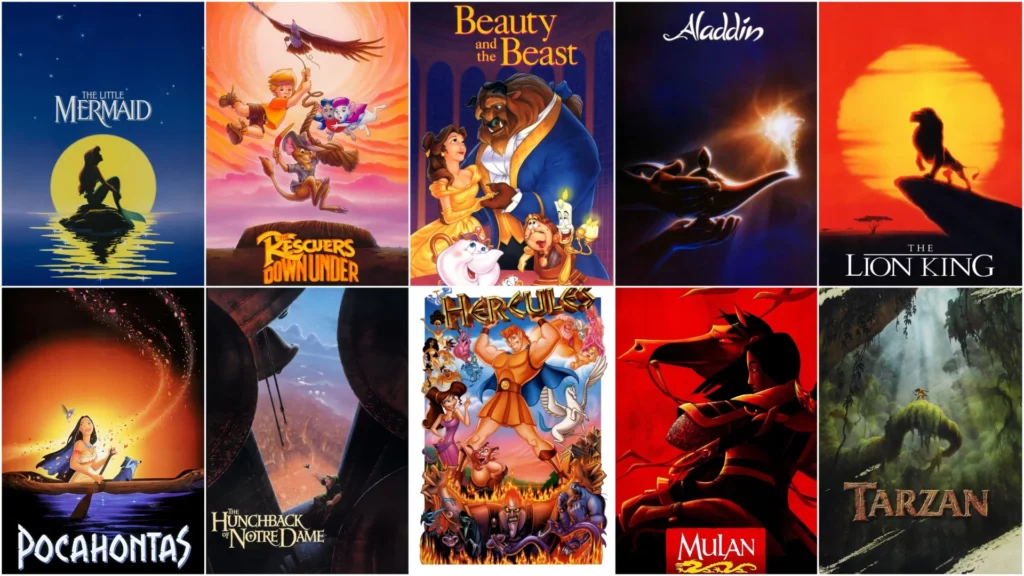
The Disney Renaissance ran from 1989 to 1999 and produced ten films that collectively changed what animated cinema could be. That decade gave the world iconic songs, villain masterclasses, and a string of characters who’ve outlasted every trend in the thirty-odd years since. Not all ten films are equal, though. Some have aged better than others, some were always more ambitious than they were successful, and a couple are genuinely under-appreciated by their own fanbase. Here is every Disney Renaissance film, ranked from weakest to strongest.
All 10 Disney Renaissance movies, ranked (Worst to best):
- Pocahontas (1995)
- The Rescuers Down Under (1990)
- The Hunchback of Notre Dame (1996)
- Hercules (1997)
- Tarzan (1999)
- Mulan (1998)
- Aladdin (1992)
- The Little Mermaid (1989)
- Beauty and the Beast (1991)
- The Lion King (1994)
You Might Also Like:
All 8 Disney Eras Ranked: A Guide to 62 Magical Movies
10. Pocahontas (1995)
Ambitious storytelling, but mixed reception.
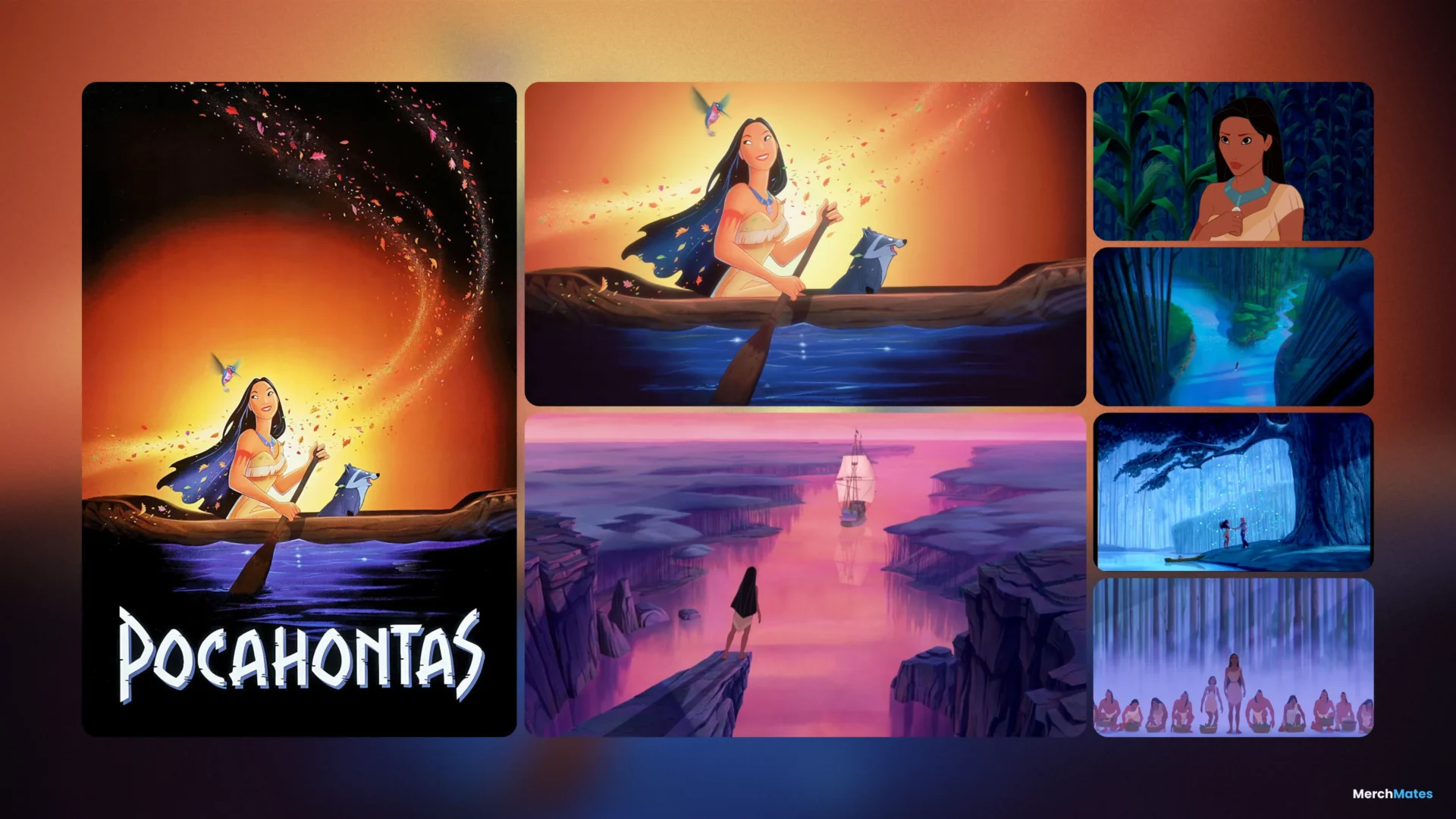
Pocahontas was Disney’s prestige project. The studio assigned its most experienced directors and animators to it while a smaller, less senior crew handled a film about a lion cub in Africa. History did not judge that allocation kindly.
It’s not a bad-looking film. The animation is beautiful, “Colours of the Wind” is excellent, and it left with two Academy Awards. But the decision to dramatise a real historical figure through a romanticised love story that bears little resemblance to what actually happened has only become harder to defend with time.
There’s also a structural problem that has nothing to do with historical accuracy. The villain is one-note, the romance is rushed, and the film reaches for an epic tone it never quite earns.That it ended up at the bottom of this list says more about the strength of what surrounded it than any individual failing.
9. The Rescuers Down Under (1990)
An underrated gem with adventure and heart.
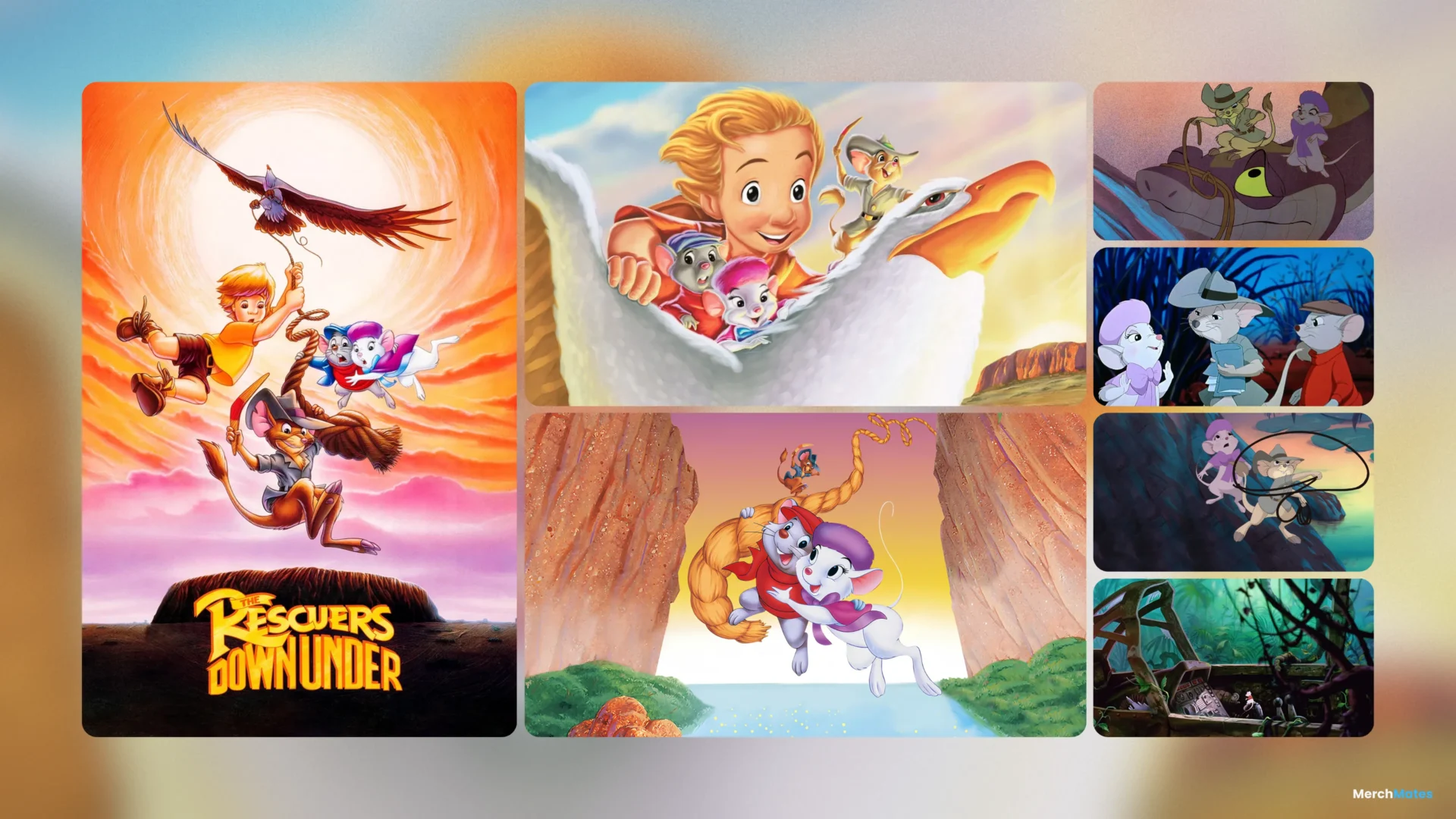
The Rescuers Down Under is the Renaissance’s most forgotten film, and one of its most technically significant. Released in 1990, it was the first feature film produced entirely using CAPS (the Computer Animation Production System developed with Pixar), giving it a visual dynamism its peers couldn’t match. The opening sequence, with Marahute the golden eagle soaring over the Australian outback, remains one of the era’s finest pieces of animation.
It’s also the only Renaissance film with no character-sung musical numbers. For a studio that had built its revival on Broadway-style music, that was a bold creative call, and one that contributed to the film quietly disappearing from the cultural conversation.
Bernard, Bianca, and the Australian setting work well enough. The problem is that nothing here reaches an emotional peak. Without a memorable soundtrack to carry it, the film feels slight compared to everything around it. Worth watching to complete the Renaissance picture, and technically remarkable. Just not quite in the same league.
8. The Hunchback of Notre Dame (1996)
Dark themes paired with stunning artistry.
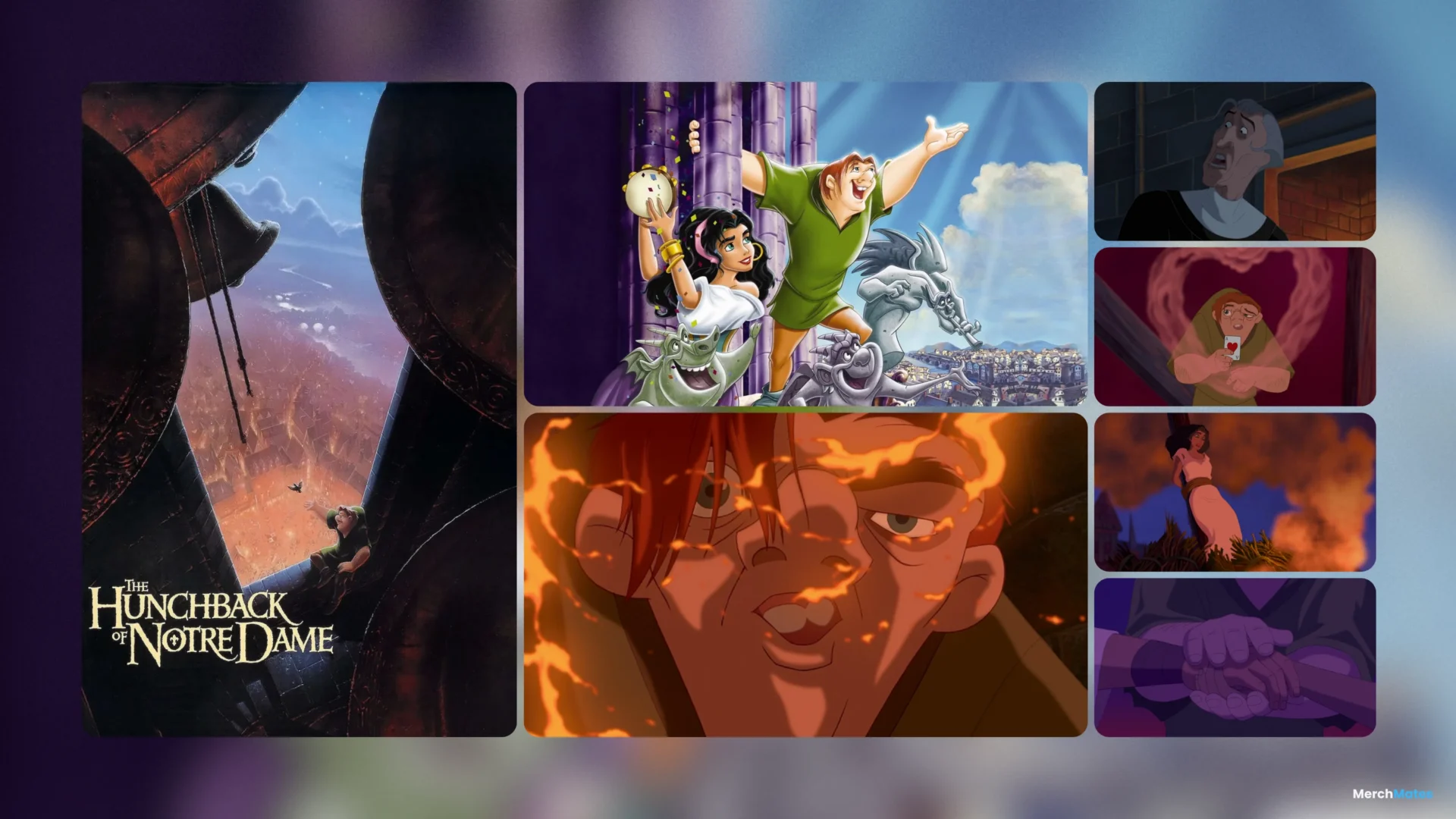
Hunchback is the Renaissance film most often underestimated, and the one most worth revisiting as an adult. It deals in lust, prejudice, and abuse of power, themes most Disney films wouldn’t touch, and it doesn’t blink at them. Judge Frollo is a villain who believes his wickedness is holy, and “Hellfire” gives him a musical number to say so directly. It remains arguably the most sophisticated villain song in Disney’s catalogue.
Alan Menken’s score, built on church bells and Latin choral arrangements, gives the film a weight that matches its visual ambition. The rendering of Notre Dame Cathedral is stunning: shadowed and vast in a way that makes Quasimodo’s isolation feel oppressive.
Where it falls short is in its ending, which pulls its punches, and its gargoyle trio, who undercut some of the film’s darker moments at exactly the wrong times. Hunchback is brave enough to go somewhere different, but not quite brave enough to see it all the way through. Still easily one of the most interesting films of the era.
7. Hercules (1997)
A fun, light-hearted take on Greek mythology.
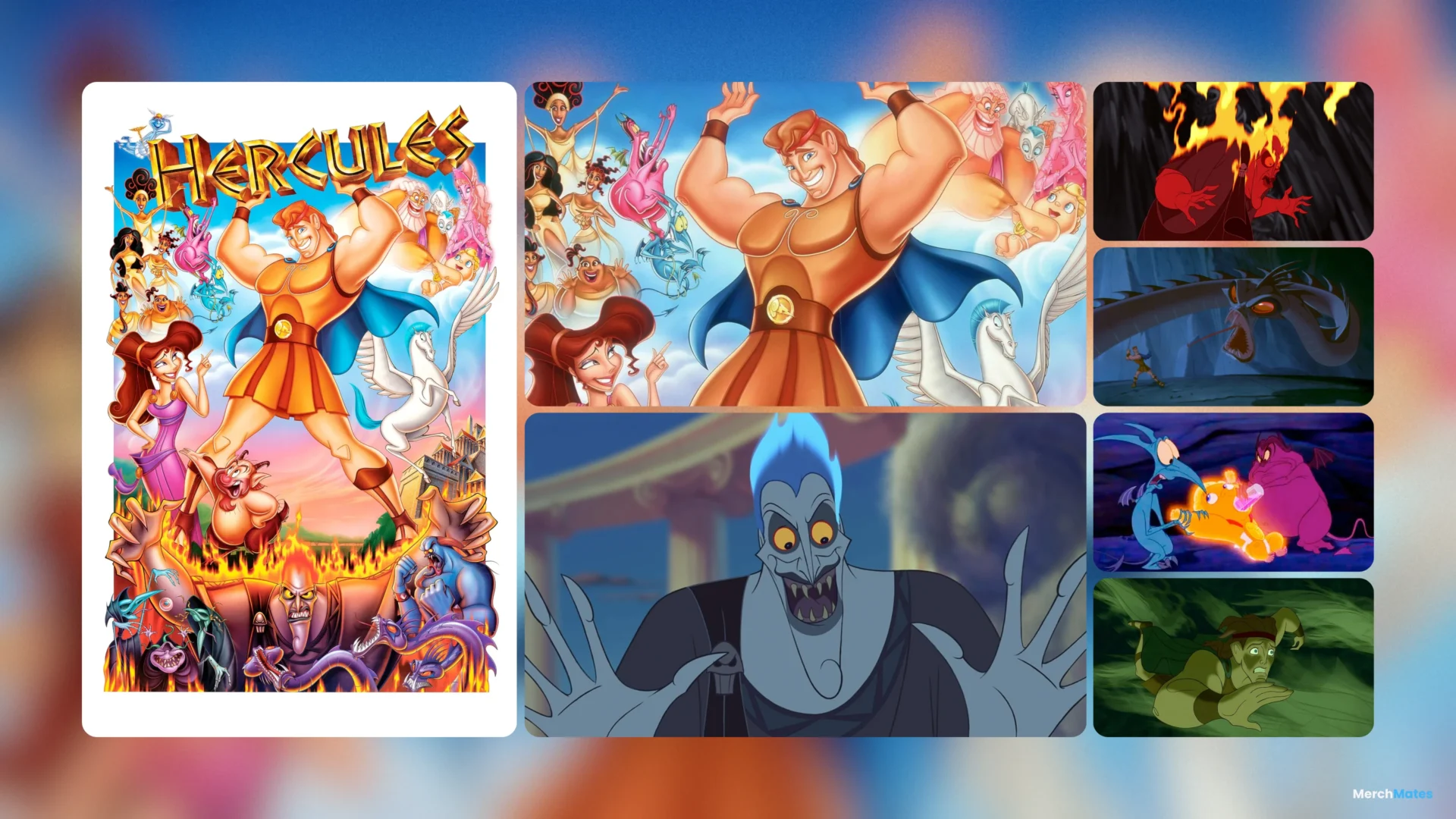
Hercules knows exactly what it is, and it has a very good time being it. The lightest film in the Renaissance canon, it leans hard into comedy, bright colours, and a visual style drawn from ancient Greek pottery. The Muses, five gospel-singing women who narrate the story like an ancient pop group, are one of the Renaissance’s great creative ideas, and the film uses them brilliantly.
“Zero to Hero” compresses an entire character arc into three minutes. “I Won’t Say (I’m in Love)” is better than most romantic comedy films manage. James Woods as Hades is perfectly cast, generating more menace through wit than most Disney villains achieve through threat.
Hercules sits at seven because its emotional ceiling is lower by design. It’s a film built for a good time rather than a lasting impression. That’s a valid creative choice, and it executes on it with real skill. What it doesn’t attempt is what stops it climbing further up this list.
6. Tarzan (1999)
An emotional and action-packed finale to the Renaissance.
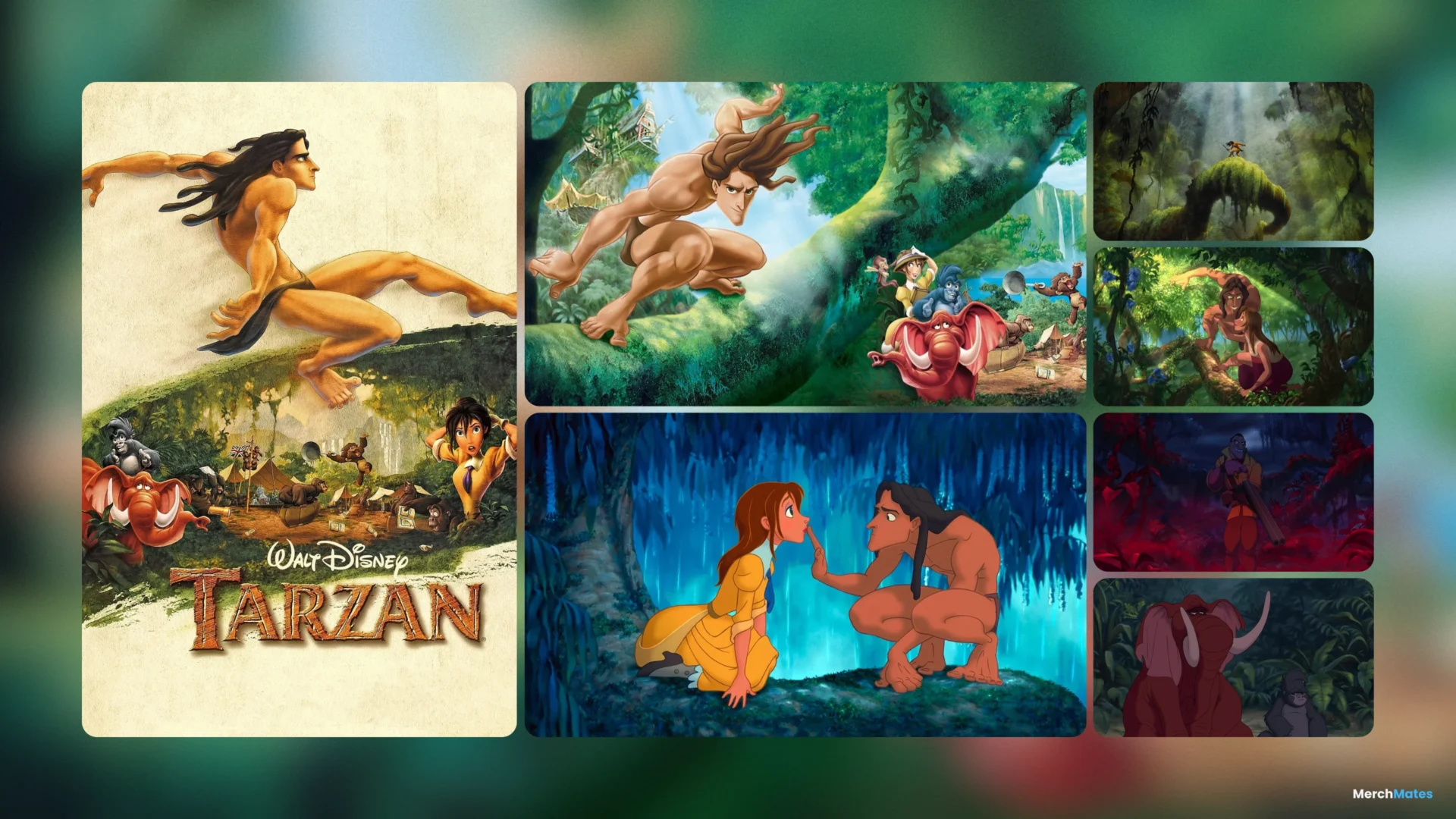
Tarzan closed out the Renaissance with a film that looks like nothing else Disney had made. The Deep Canvas technique gave hand-drawn characters fully three-dimensional backgrounds to move through, and watching Tarzan surf branches and vines at speed through a dense jungle has a physicality most animated films can’t sell. The visual craft here is exceptional.
Phil Collins replacing the conventional character-sung musical format was divisive at the time and still is. “You’ll Be in My Heart” won the Oscar. Whether the broader approach works for you depends on how attached you are to the Broadway model, but it gives Tarzan a sound completely its own.
What it handles particularly well is the question of belonging. Tarzan’s relationship with Kerchak, the gorilla father who never quite accepts him, is the emotional spine of the film, and it earns its resolution honestly. Tarzan is a better film than its reputation suggests, and one that tends to rise in people’s estimations on revisit.
5. Mulan (1998)
A story of courage, honour, and breaking stereotypes.
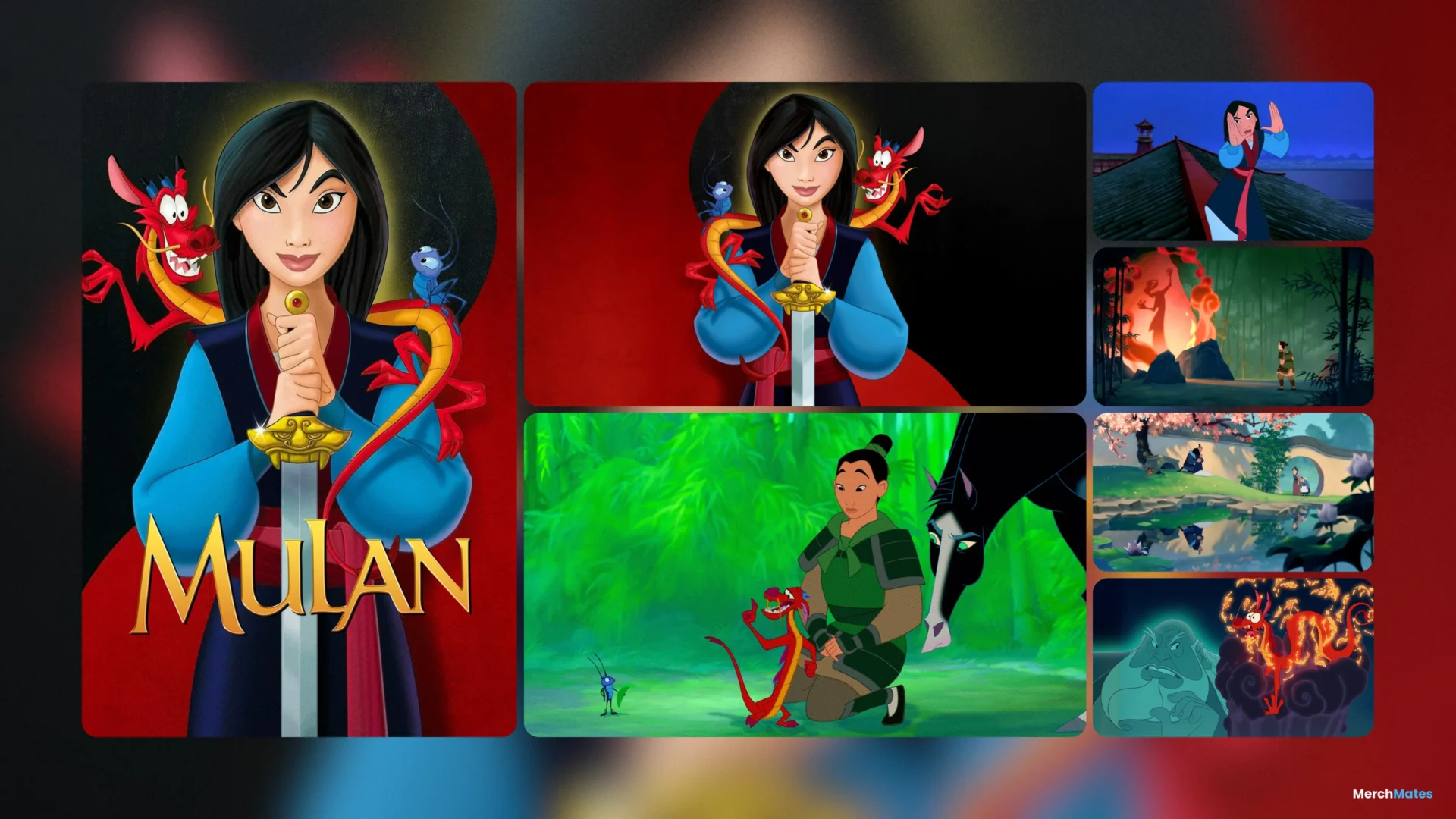
Mulan arrived near the end of the Renaissance with a story that had no obvious Disney antecedent. Not a fairy tale, not a Western myth, but a Chinese legend about a woman who takes her father’s place in the imperial army and proves herself on a scale no one anticipated. Disney handled it with more care than the era’s track record with non-European source material might have suggested.
“I’ll Make a Man Out of You” is the best training montage Disney has ever put together. Eddie Murphy as Mushu pushes harder than the script strictly requires, which is exactly what makes it work. The avalanche sequence is among the era’s most technically impressive action set-pieces.
The empowerment narrative doesn’t feel bolted on. It’s earned through the specificity of Mulan’s world and the real stakes she operates under. Where it gives ground to the films above it is in a romantic subplot that feels underdeveloped for how much story surrounds it. Comfortably in the top half.
4. Aladdin (1992)
A magical journey with a comedic twist.
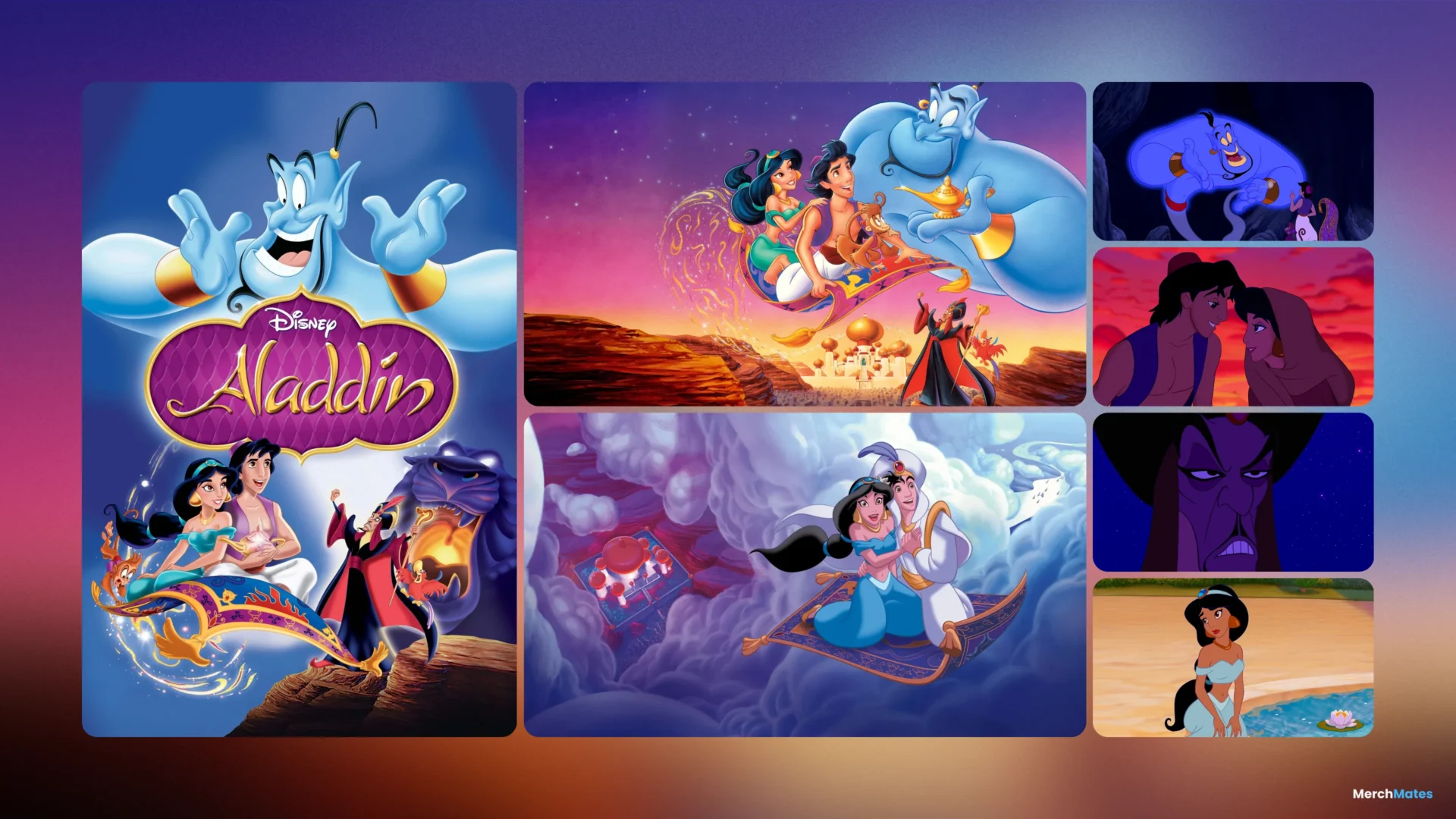
Aladdin is the film that gave Robin Williams the canvas for one of the great animated performances. The Genie is built around Williams’ improvisational rhythms; the animation team developed entirely new techniques to keep up with him, and the result is a character who shifts shape, tone, and cultural reference with a fluidity that still hasn’t been replicated.
It’s also worth noting what the film carries. Aladdin was the last project Howard Ashman worked on before his death in 1991. Tim Rice completed the remaining lyrics admirably, and “A Whole New World” won the Academy Award for Best Original Song. The carpet ride sequence that carries it is one of the Renaissance’s finest moments.
Aladdin’s weaknesses are real but minor. Jafar is functional rather than exceptional, and the second act loses some pace around the edges. Neither flaw significantly undermines what surrounds them. This is a rich, deeply entertaining film that delivers every time it needs to.
3. The Little Mermaid (1989)
The film that started it all.
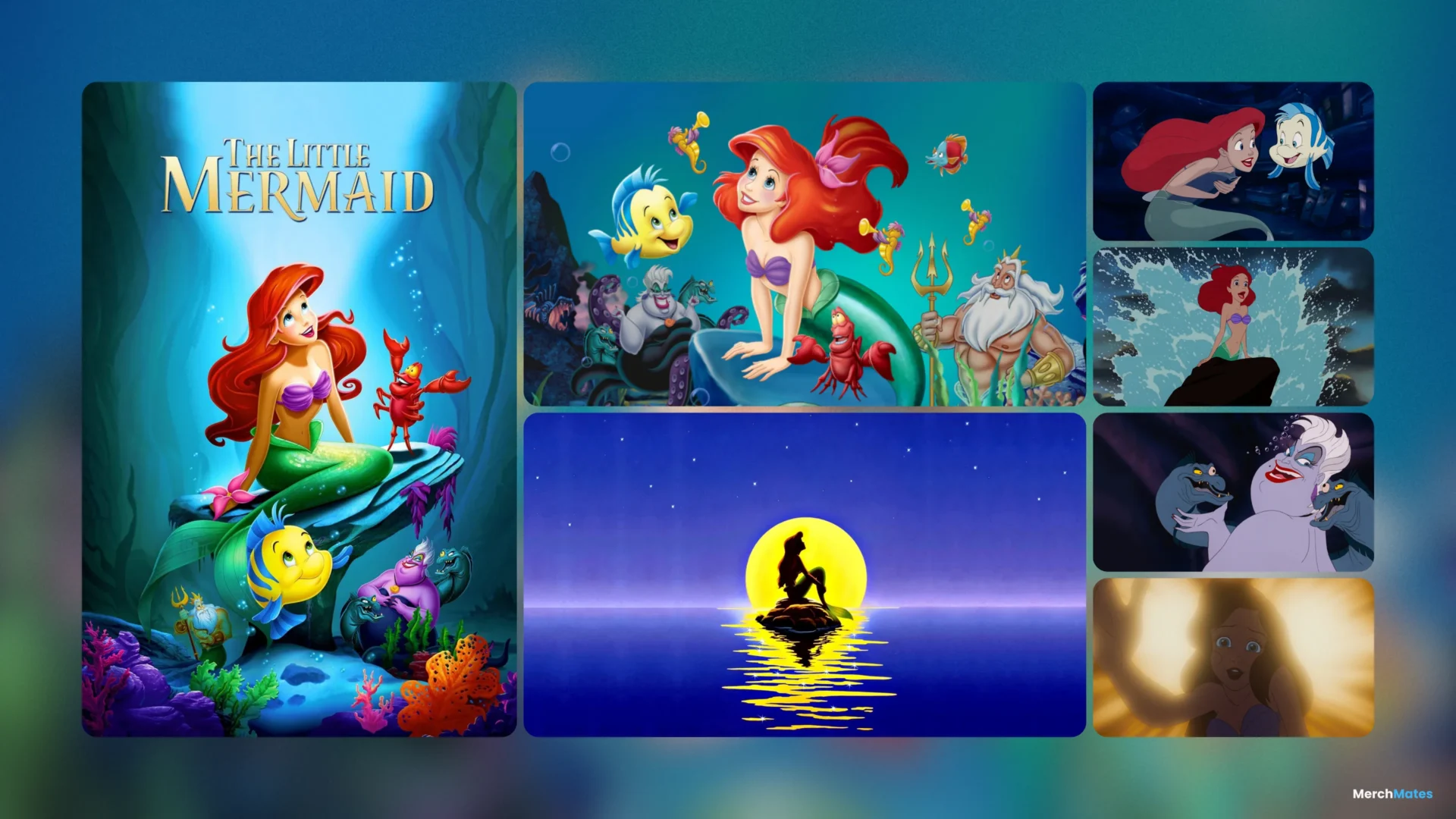
Without The Little Mermaid, the Disney Renaissance almost certainly doesn’t happen. Disney had spent much of the 1980s in creative decline, and The Little Mermaid, released in November 1989, changed the studio’s trajectory overnight and established the blueprint every film that followed would build on.
Howard Ashman’s “I Want” concept, an early song that establishes exactly what the protagonist yearns for, is executed here about as well as it ever was. “Part of Your World” is still the template for how a Disney character introduces themselves to an audience. Ursula, voiced by Pat Carroll in a performance that deserves more recognition than it gets, is exceptional. “Poor Unfortunate Souls” makes every other Disney villain number look slightly under-rehearsed.
The Little Mermaid is ranked third because what followed it refined everything it established. That’s not a criticism. Starting a creative tradition and being surpassed by what it inspired is its own kind of achievement.
2. Beauty and the Beast (1991)
A tale as old as time with groundbreaking achievements.
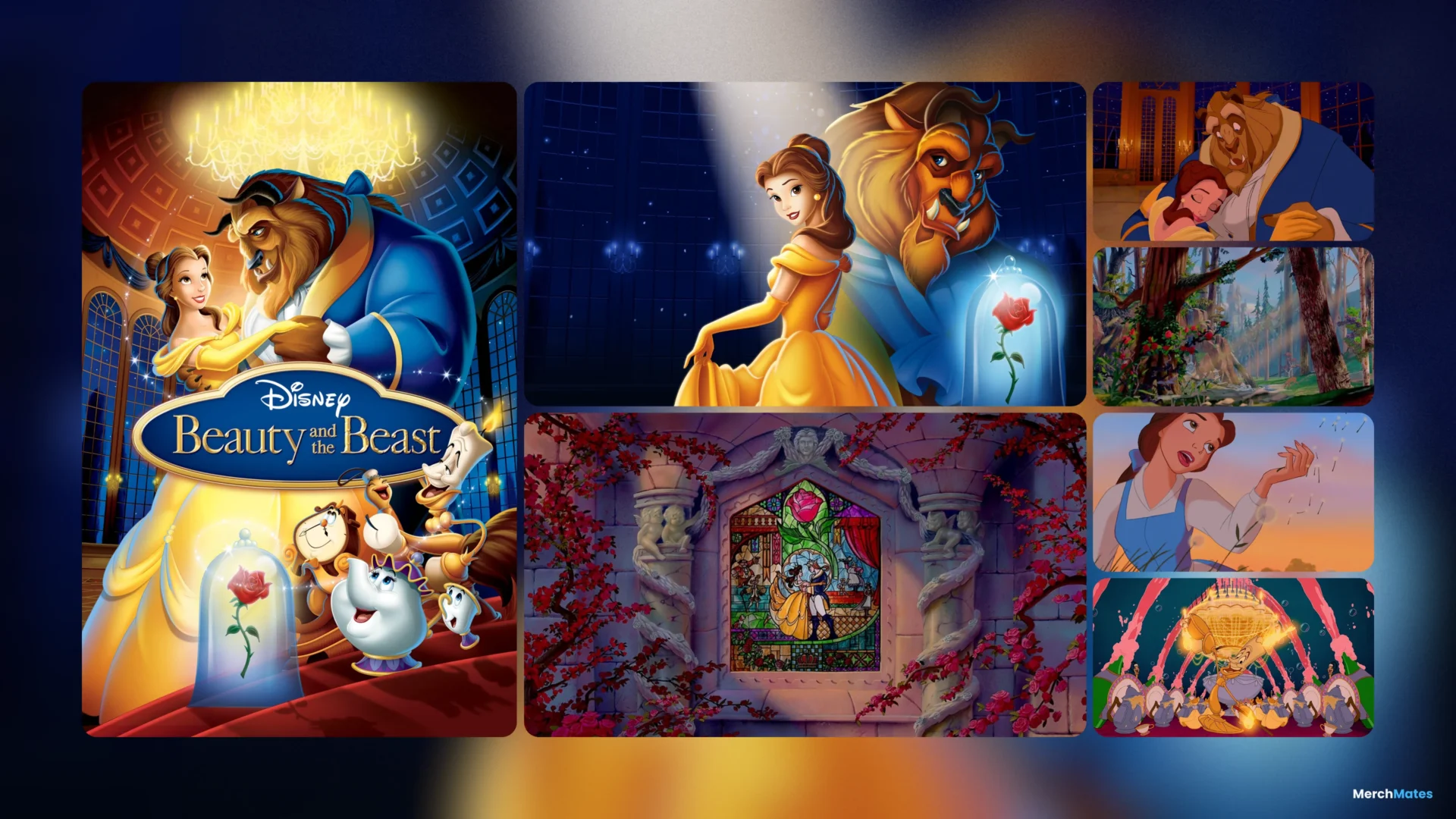
In 1992, Beauty and the Beast became the first animated film nominated for the Academy Award for Best Picture, at a time when that category had only five slots. It lost to The Silence of the Lambs. The nomination alone was a statement.
Howard Ashman completed this film before his death, and it shows. The screenplay has a craftsmanship that gives every scene a purpose, and the music matches it. “Be Our Guest” runs six minutes and covers more ground than most short films manage. The ballroom sequence, Belle and the Beast in a vast candlelit space as the title song plays, is among the most compositionally accomplished things Disney has ever produced.
The case for putting Beauty and the Beast at number one is entirely reasonable: tighter screenplay, more consistent tone, and arguably Menken’s finest work. It comes down to cultural penetration. The film that follows this one reached further into the world and stayed there longer. The gap, though, is smaller than most rankings suggest.
1. The Lion King (1994)
The king of the Renaissance Era.
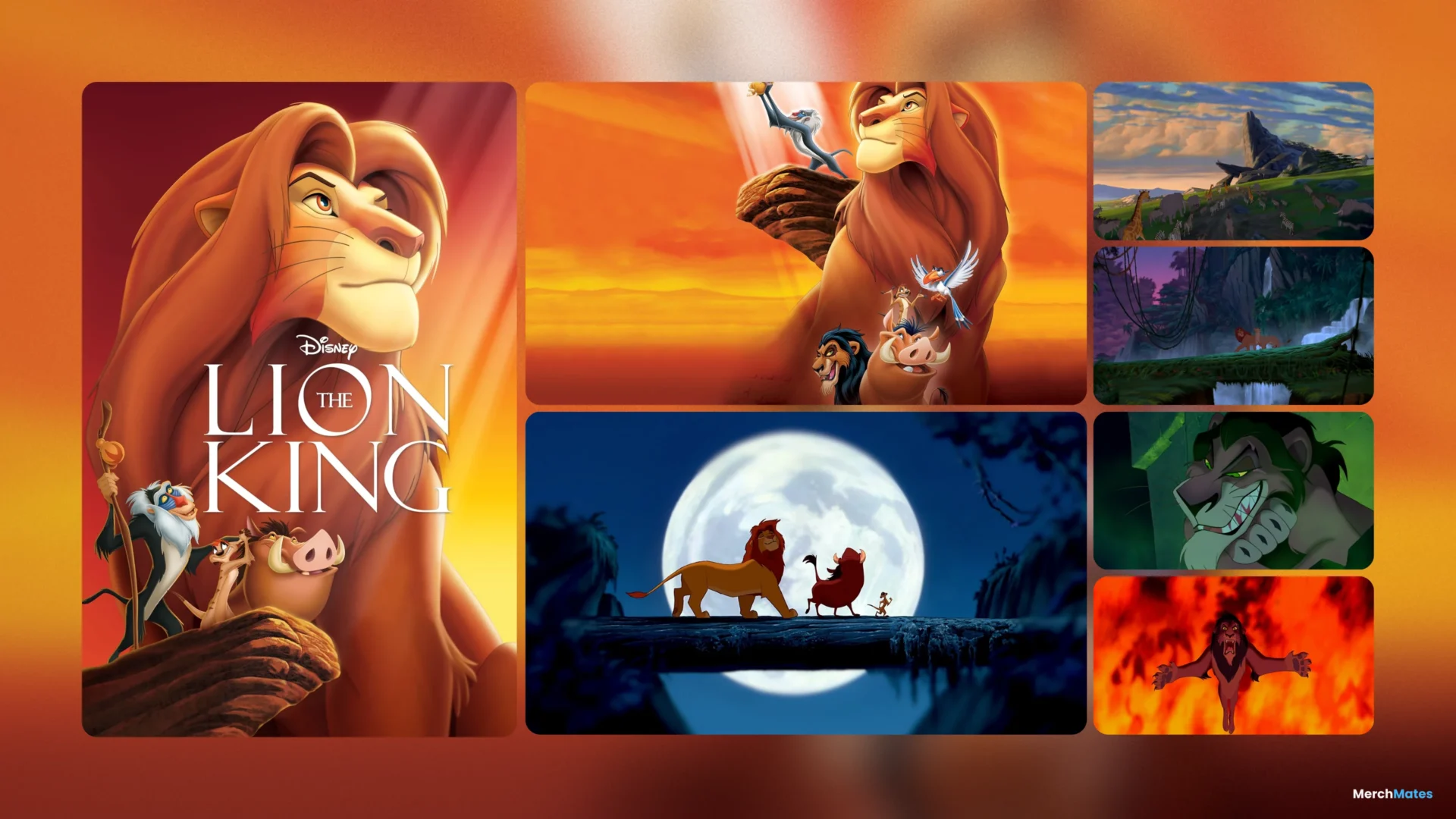
There’s a well-documented footnote to The Lion King’s production. Disney’s leadership considered it the lesser project. Pocahontas got the A-team. The Lion King went to a less senior crew. When both films released within a year of each other, one became a generational landmark and the other a cautionary tale about misplaced ambition.
The film’s cultural footprint is unlike anything else the Renaissance produced. “Hakuna Matata” entered everyday language in a way no other Disney song has managed, a phrase that became shorthand for an entire attitude toward difficulty, needing no explanation. “Circle of Life” opens the film like an event. Elton John’s songs, built around Hans Zimmer’s score and African musical traditions, give it a sonic scale that matches its visual ambition.
What elevates The Lion King is its refusal to soften what it’s about. Mufasa’s death is not quickly resolved. Simba’s guilt and exile are treated seriously. The reckoning between Simba and his responsibility is not a tidy lesson. That emotional weight, sustained across the full runtime, is what separates it from films that are excellent but lighter on their feet. The Broadway adaptation, the 2019 remake, the sequels and the cultural legacy would not exist if this film were merely very good and not excellent.
Frequently Asked Questions
What films are included in the Disney Renaissance?
The Disney Renaissance spans 1989 to 1999 and includes ten films: The Little Mermaid (1989), The Rescuers Down Under (1990), Beauty and the Beast (1991), Aladdin (1992), The Lion King (1994), Pocahontas (1995), The Hunchback of Notre Dame (1996), Hercules (1997), Mulan (1998), and Tarzan (1999).
What is the best Disney Renaissance movie?
The Lion King (1994) is widely regarded as the peak of the Renaissance, and this ranking agrees. Its cultural reach, emotional weight, and soundtrack set it apart from even the era’s other excellent films.
Is Beauty and the Beast better than The Lion King?
It’s a close argument. Beauty and the Beast has the tighter screenplay and was the first animated film nominated for the Best Picture Oscar. The Lion King edges it on cultural impact and emotional ambition, but the gap is smaller than most rankings suggest.
Why is Pocahontas ranked lowest?
Pocahontas was ironically Disney’s prestige project while The Lion King was developed by a less senior crew. It carries the weight of both historical inaccuracy and a narrative that never quite earns the epic tone it reaches for.
Which Disney Renaissance film is most underrated?
The Hunchback of Notre Dame. It’s the Renaissance’s most tonally ambitious film, features arguably Alan Menken’s finest score, and contains one of the most sophisticated villain songs Disney has produced. It consistently ranks lower than it merits.
Did all Disney Renaissance films win Academy Awards?
No. The Rescuers Down Under is the only Renaissance film not nominated at either the Annie Awards or the Academy Awards. Six films — The Little Mermaid, Beauty and the Beast, Aladdin, The Lion King, Mulan, and Tarzan — earned Rotten Tomatoes scores above 85%.

George Patient
George is the founder and editor of Merch Mates, writing about film, TV, gaming and the Disney parks.
You might also like
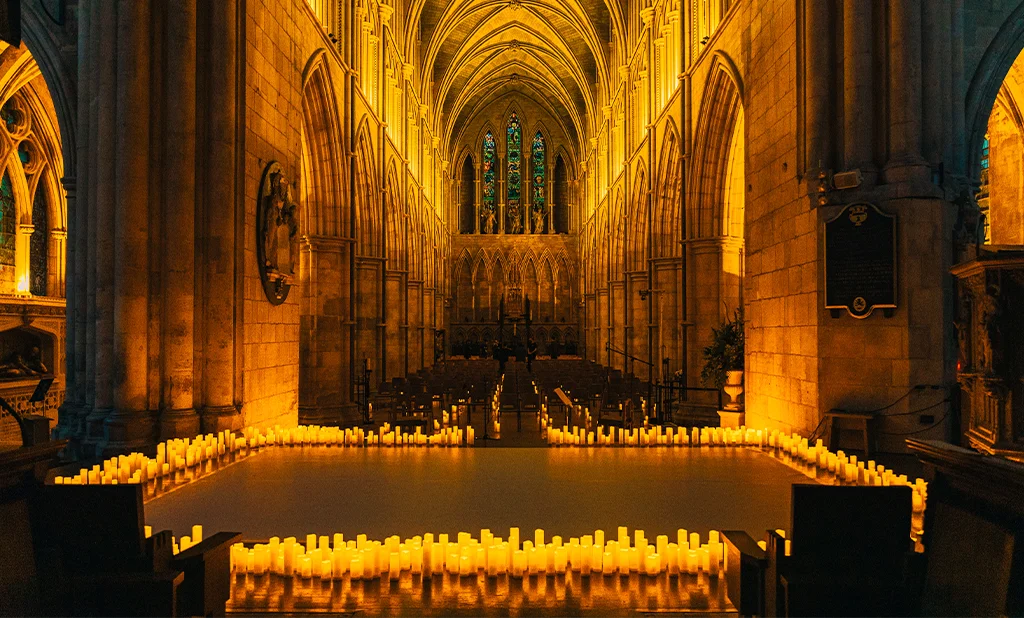
Candlelight: Disney Love Songs is coming to seven UK cities, from £15.50
Every Spider-Man Movie, Ranked Worst to Best
All 5 Toy Story Movies, Ranked (Including ‘Toy Story 5’)
Toy Story 5 review – a heartfelt return to form
Star Wars: Maul – Shadow Lord season 1 review
Explained | Zootopia 2 Ending: What Comes Next?
Best 20 Female Star Wars Characters
