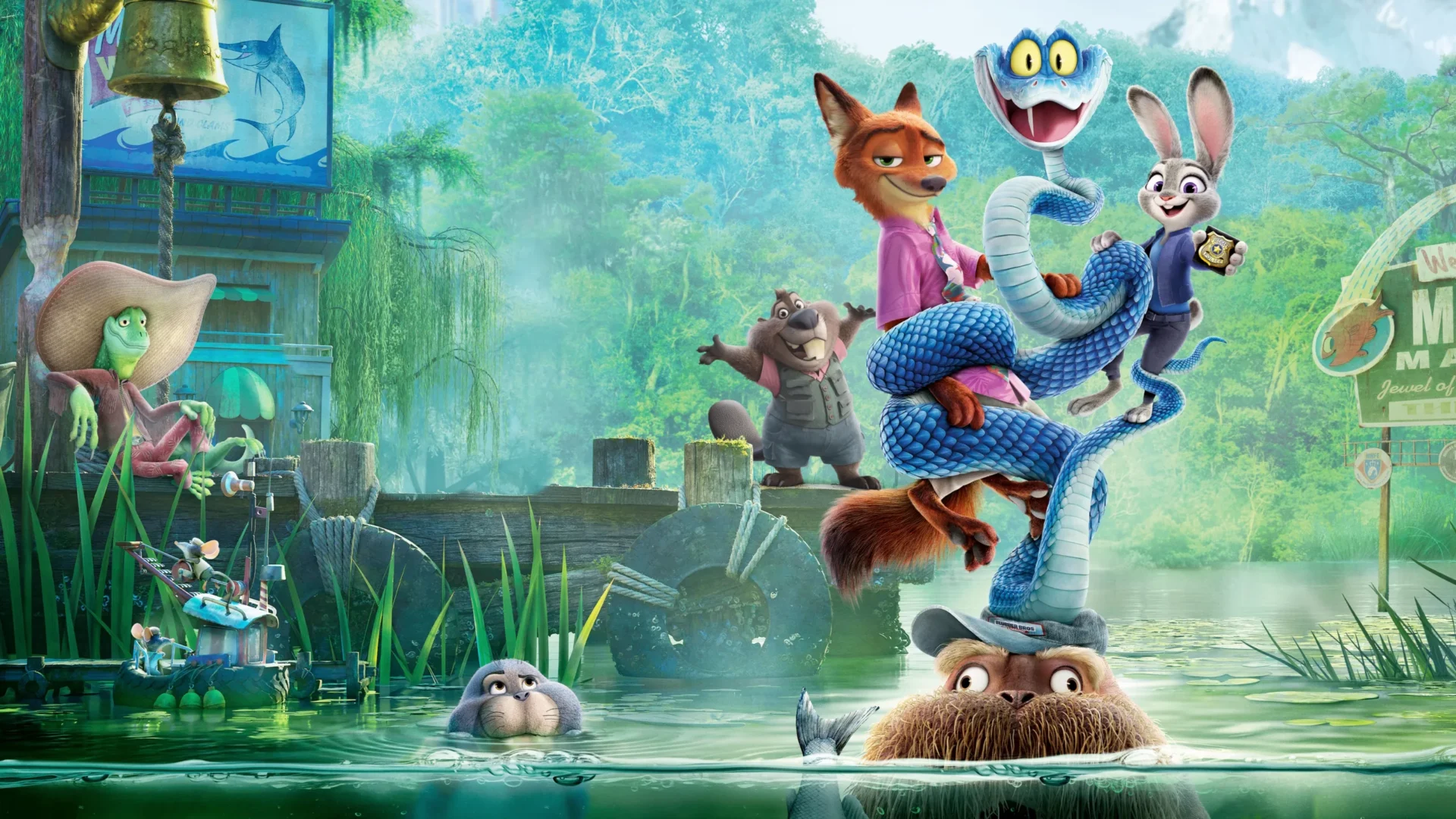
Zootopia 2 ended the nine-year wait between instalments by breaking the record for the biggest animated opening in cinema history, pulling in $560 million globally across its debut weekend. Now it’s on Disney+ and, if you’ve just finished it, you probably have questions – about where that bird feather came from, what Agnes De’Snake’s story actually means for the city, and how Nick Wilde managed to accidentally release 200 criminals on his way out of a prison break. This is the ending explained.
The film (released as Zootropolis 2 in the UK) is a more ambitious piece of work than most sequels manage to be. It doesn’t just continue Judy and Nick’s story – it rewrites the founding myth of the city they work to protect. The conspiracy at its core is built on something genuinely affecting, and the reveal of who Pawbert Lynxley really is lands harder than most Disney villain twists.
Here’s what it all means, and where the franchise goes next.
1. The bird theory is real and it starts with a password
The evidence was hiding in the ZPD’s IT department the entire time.
Paul Moledebrandt – Zootopia’s least threatening IT officer, voiced by Josh Gad – has a post-it note on his monitor early in the film. The password reads “P@Rt3izFr&Brd…” before the rest is cut off. The fan community decoded it quickly: the missing letters complete the phrase to read “Part 3 is for real, and birds are too.”
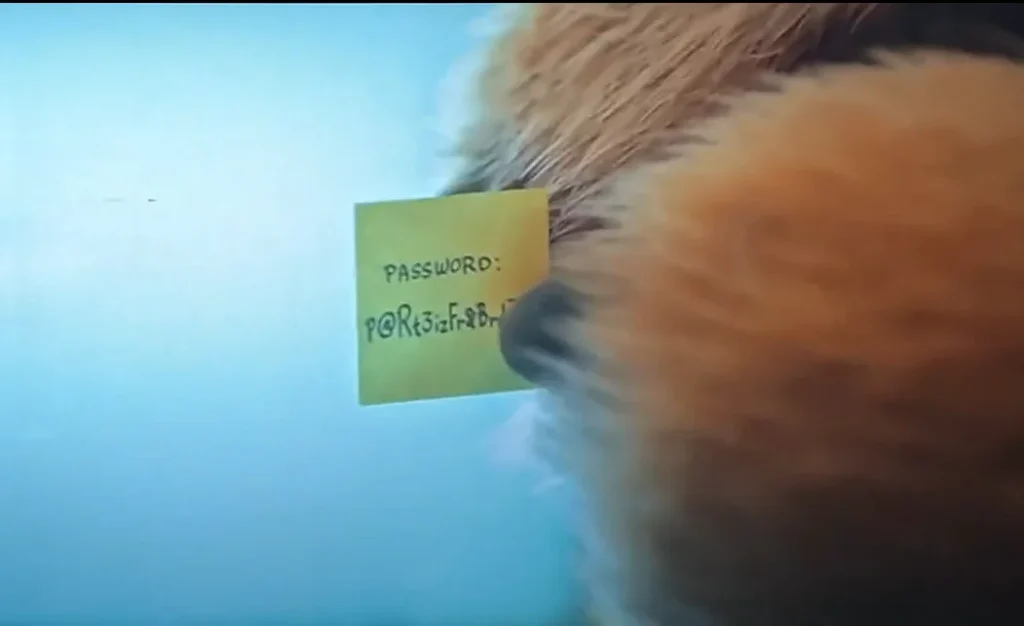
On its own, that’s a fun Easter egg. But the film backs it up.
In the post-credits scene, Judy is alone in her apartment, replaying a recording on her carrot pen — the same pen Nick repaired and returned to her as a gesture that means far more than either of them will admit out loud. She leaves it on the windowsill and heads out. Then a large shadow passes the window, and a feather drifts down into frame.
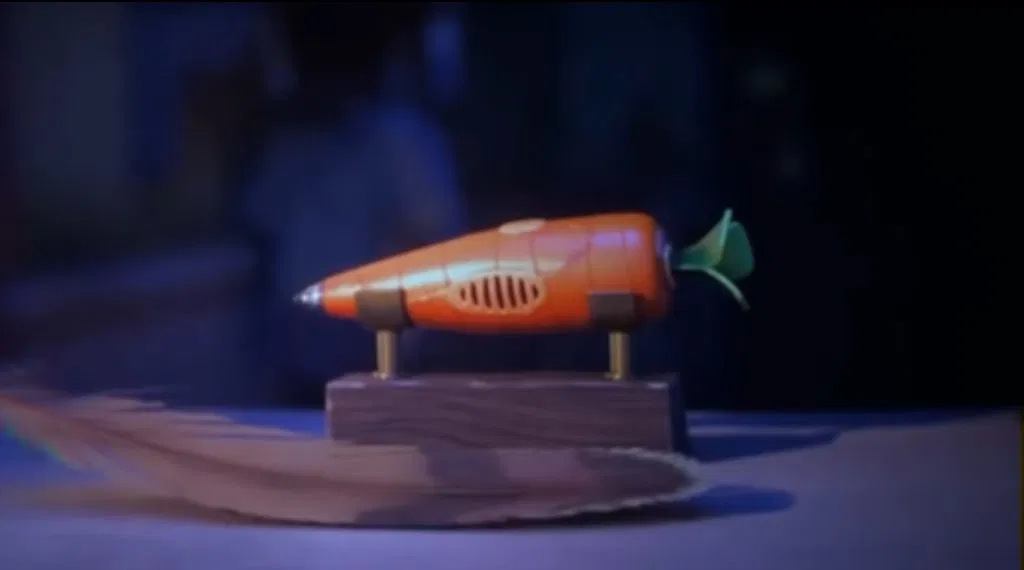
Director Jared Bush confirmed that the tease is intentional, describing the world of Zootopia as “a continent in a world” — meaning the mammal metropolis we’ve seen across two films is only one part of a much larger universe. Reptiles were absent from the first film and became the focus of the second. The pattern is deliberate. Birds are next.
There’s no confirmed timeline for Zootopia 3 at this point, though Bush and co-director Byron Howard have both said Bush has begun early work on it. Given Disney Animation’s current schedule — Hexed in late 2026, Frozen 3 in 2027 — the earliest realistic window for a third Zootopia film is probably 2029. The film itself has a joke about this: Nick tells Judy she’ll have to “wait another ten years” for him to open up, which reads as a quietly self-aware nod to the nine-year gap between the first two films.
2. Agnes De’Snake and the lie Zootopia was built on
This is the heart of the film, and it’s more unsettling than it first appears.
For a century, Zootopia’s founding story has been simple: Ebenezer Lynxley built the Weather Walls that allowed different climate zones — and therefore different species — to coexist in one city. He is a legend. His family, led by patriarch Milton Lynxley (David Strathairn), are pillars of Zootopian society, still benefiting from that founding reputation.
None of it is true.
The Weather Walls were designed by Agnes De’Snake, Gary’s great-grandmother. She was a pit viper with an ambitious, inclusive vision: a city for all animals, with a dedicated Reptile Ravine district tucked between Tundratown and Sahara Square. She approached Ebenezer as an investor. He stole her patent, burned the original, and when his tortoise maid tried to stop him, he murdered her and framed Agnes for the crime. Reptiles were driven out. Tundratown expanded over Reptile Ravine, burying it under snow. The Lynxley family has been trading on a lie ever since.
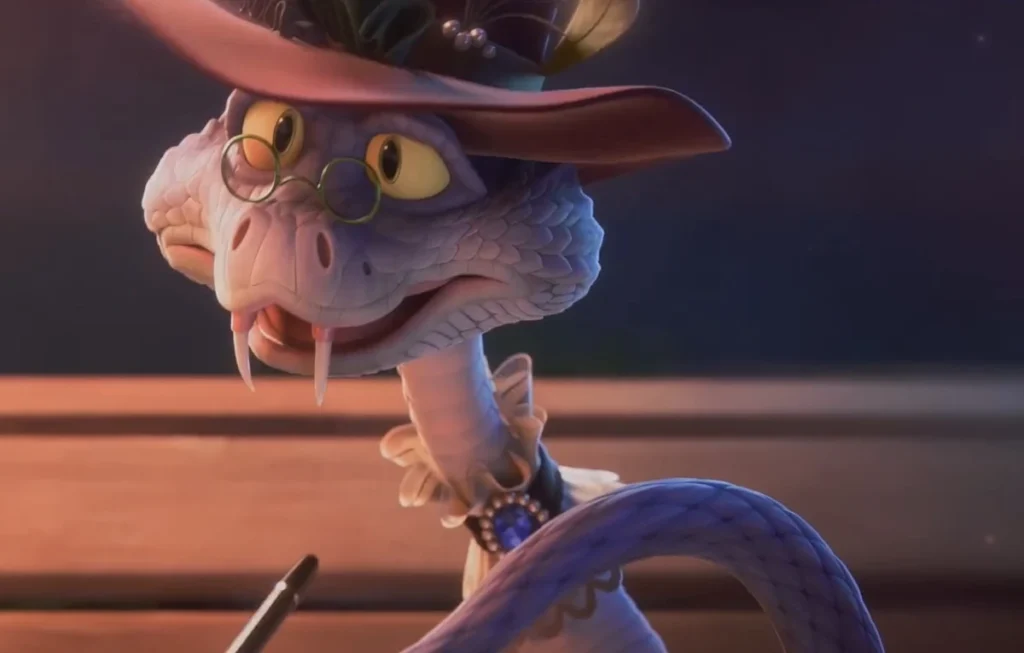
The Lynxley Journal, which Gary steals at the Zootennial Gala, is the physical evidence. Its metal cover is heat-sensitive and it appears blank to mammals, but a pit viper’s thermal-sensing pits can read it. It was designed, in effect, to be readable only by the De’Snake family. That detail is a quiet piece of worldbuilding that does a lot of work: it means the cover-up was engineered to last, and that exposing it required someone who was never supposed to come back.
The social allegory is not subtle, but it doesn’t need to be. Gentrification, stolen intellectual property, systemic prejudice maintained through institutional myth — it’s all there. What makes it work as drama rather than lecture is Pawbert.
Pawbert Lynxley, voiced by Andy Samberg, starts the film as the family’s “black sheep” — overlooked, mocked, treated as lesser than his siblings Cattrick (Macaulay Culkin) and Kitty (Brenda Song). He appears to help Judy and Gary find the truth. The twist is that he has no interest in the truth. He wants to find the original patent so he can destroy it, eliminating the evidence of his family’s crimes in exchange for his father’s approval. It’s a reveal that works because the film gives him just enough warmth early on to make the betrayal register. He’s not a straightforward villain. He’s someone who chose the wrong thing in full knowledge of what it was.
The ending restores Agnes’s name as the true founder of Zootopia, reopens Reptile Ravine, and places a golden statue of her at the entrance of the newly restored district. It’s the kind of moment Disney does well when it commits — specific, earned, and actually about something.
3. The horror references that reward adults
Zootopia 2 is a family film with two of the most deliberate adult Easter eggs Disney Animation has ever put on screen.
The first involves Dawn Bellwether’s prison cell. When Nick ends up briefly detained, he walks past a cell lit from within — and there she is, sitting in a single-occupant enclosure with a bulletproof glass front wall instead of bars. It is an exact recreation of Hannibal Lecter’s cell in The Silence of the Lambs. Jenny Slate delivers Bellwether’s line as a dry Lecter impression, and the layered joke is brilliant: a literal sheep, the lamb of “Silence of the Lambs,” doing her best Anthony Hopkins.
Bush has since revealed that the scene was originally four minutes long and reproduced the first Lecter-Clarice encounter word for word, down to the guard’s directions. It was cut because it was pulling the film away from younger viewers. The version that survived is tighter for it — the reference lands in seconds, which is exactly how a reference should work.
The second is less subtle. During the third-act chase through the Lynxley estate, Pawbert pursues Judy and Gary through a frosted hedge maze — a near-identical recreation of the Overlook Hotel’s labyrinth from Stanley Kubrick’s The Shining. Pawbert hunches and limps through it in a pose that maps directly onto Jack Torrance. Composer Michael Giacchino weaves in the actual Shining score. Bush and Howard have confirmed both references were entirely intentional, and described the Shining sequence as something they had wanted to build since early in the film’s development.
Neither reference is there for its own sake. Both function within the film’s logic. Bellwether is genuinely dangerous and her containment mirrors that danger. Pawbert, by the time he reaches the maze, has fully committed to his worst impulse. The horror framing earns its place.
4. Ke Huy Quan’s Gary De’Snake and the casting that writes itself
Ke Huy Quan won his Academy Award for Everything Everywhere All at Once in 2023. Before that, he was best known as Short Round in Indiana Jones and the Temple of Doom — the kid sidekick to a man with a famous, pathological fear of snakes.
Casting him as a snake is not an accident.
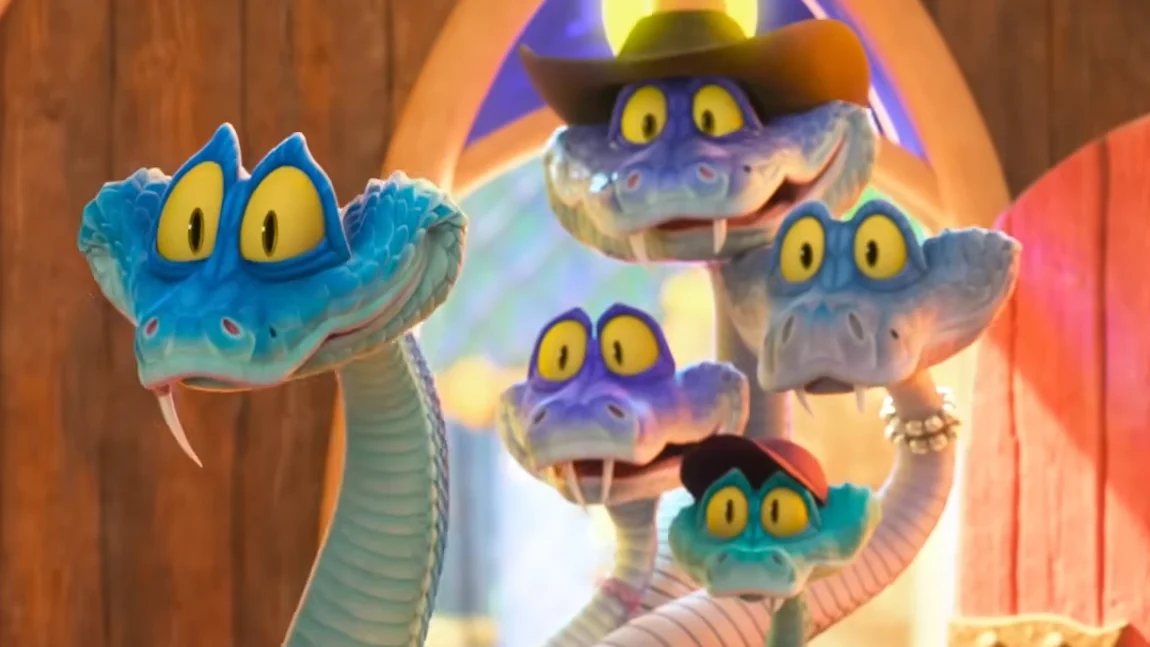
Gary De’Snake is a Sunda Island pit viper, cerulean blue with a wide jaw and yellow eyes. He’s anxious, talkative, and absolutely not a threat to anyone, which is the whole point. Ke Huy Quan has spoken about Gary sharing his own optimistic, eager-to-help personality, and it shows. The film doubles down on the Indiana Jones connection in Gary’s family epilogue: one of his relatives wears a baseball cap that matches Short Round’s, another wears a broad-brimmed fedora. It’s the kind of layered visual joke that plays differently depending on how much film history you’re bringing to the screening.
The casting doesn’t stop there. During a kitchen chase at the Zootennial Gala, a lion chef’s hat is knocked off to reveal a rat underneath, controlling the cooking — a direct Ratatouille reference. The animal who clocks it is a raccoon voiced by Alan Tudyk, who shouts “I knew it!” That raccoon is a callback to the “Raccacoonie” film-within-a-film from Everything Everywhere All at Once, the movie that won Ke Huy Quan his Oscar. One gag, two layers, zero exposition required.
5. The 200 criminals Nick accidentally freed
The Reptile Conspiracy is resolved. The Lynxleys are arrested. Agnes De’Snake is recognised as Zootopia’s true founder. By every measure, this should be a clean ending.
Except Nick hit the wrong button.
During his prison break with Nibbles (Fortune Feimster), a beaver with a talent for chewing improvised keys from mop handles, Nick inadvertently triggers a master release that opens every cell in the facility simultaneously. Roughly 200 high-profile criminals walk straight out, steal every ZPD vehicle in the car park, and disappear into the city.
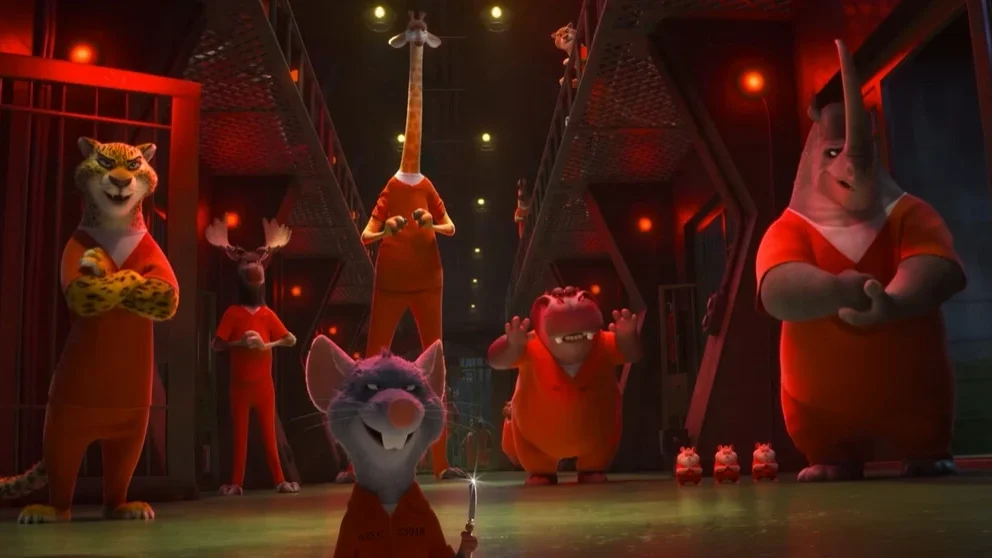
Among them is Dawn Bellwether — though Nick and Judy recapture her in a brief mid-credits chase before she can get far. The other 199 are still out there.
It’s an elegantly messy way to set up what comes next. Zootopia 3 doesn’t need a new conspiracy from scratch: Nick and Judy already have a full case backlog created by Nick’s own mistake. The film uses this not just as franchise scaffolding but as a character beat — Nick’s combination of instinct and carelessness causing a problem that Judy’s patience and structure will have to help fix. Their differences remain the point, which is exactly where Zootopia 2 began.
What Zootropolis 3 looks like from here
Reptile Ravine is open. Agnes De’Snake has her statue. The Lynxleys are in prison, including a sullen Pawbert, who reportedly spends his early incarceration wondering what might have been. The city’s social fabric has genuinely changed.
And somewhere above Judy’s apartment, there are birds.
The franchise has earned the right to keep going. Zootopia 2 doesn’t coast on the goodwill of the original — it uses the city’s history as the source of a new story, and delivers a villain whose motivation is specific enough to be genuinely affecting rather than generically menacing. That doesn’t happen by accident. It happens when a sequel trusts its own premise.