Project Hail Mary review — hopeful, inspiring and epic
Project Hail Mary is the best kind of blockbuster: one that makes you feel smarter and more hopeful on the way out than you did on the way in. Phil Lord and Christopher Miller have adapted Andy Weir's novel into a film that's funny, visually staggering, and surprisingly moving, anchored by Ryan Gosling at his most likeable and a practical puppet that somehow becomes the most emotionally compelling character of the year so far. If you're wondering whether it's worth your time, the short answer is yes. The slightly longer answer is yes, and try to see it in IMAX if you can.

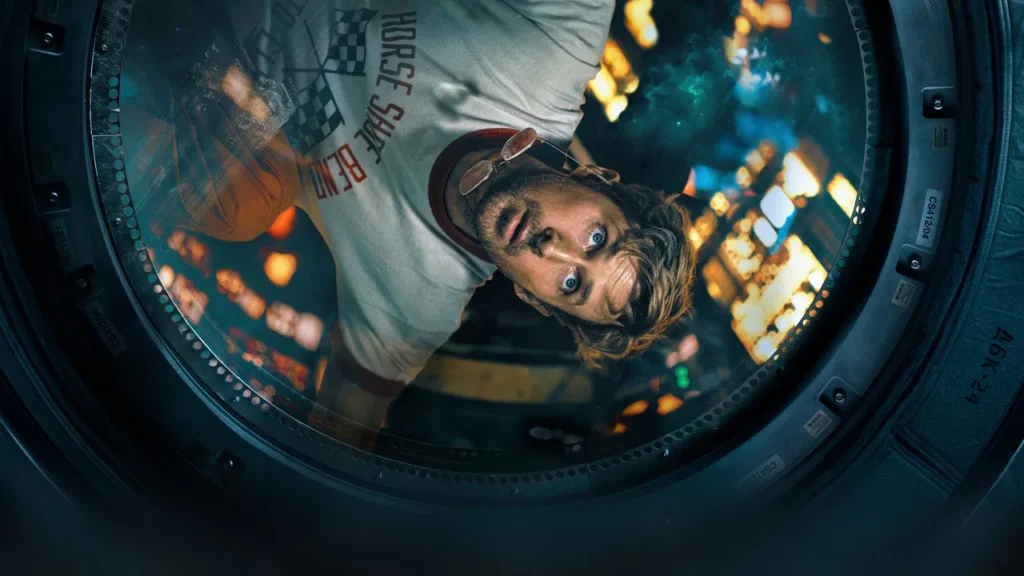
A triumphant adaptation that earns every emotional beat.
Audience score8,369 ratings on TMDB
What it gets right
Most sci-fi films set in space carry a weight of inevitability. Someone is going to sacrifice themselves. Something irreversible is going to go wrong. There’s a ticking clock, and the audience knows the bill is coming. From Armageddon through to Interstellar, that sense of impending doom is baked into the genre. Project Hail Mary acknowledges the stakes — the sun is dying, and humanity’s survival depends on a reluctant science teacher solving a problem lightyears from home — but it never lets the weight of that premise suffocate the story.
Instead, the film finds its register somewhere between wonder and warmth. It’s genuinely funny without undermining the tension, and it’s emotional without tipping into melodrama. That balance is harder to strike than it looks, and Lord and Miller get it right for almost the entire runtime.
Ryan Gosling carries the first act almost entirely on his own, and he’s magnetic throughout. The physical comedy is precise — the glasses hanging off his face became a running joke in our screening — but it’s the quieter moments that stick. His performance when Grace starts remembering who he is, and what he agreed to do, shifts the film from adventure into something more layered. Gosling plays confusion, grief, determination, and silliness within the same scene, and none of it feels forced.
Then Rocky arrives, and the film lifts to another level entirely. The friendship between Grace and Rocky is the emotional spine of Project Hail Mary, and it works because the film takes the time to build it. The language barrier, the problem-solving, the small victories and the setbacks. By the time they’re finishing each other’s sentences through a jury-rigged translator, the bond feels earned. That’s rare for any on-screen relationship, let alone one between a man and a faceless rock creature.
Visually, the film is outstanding. Greig Fraser’s cinematography captures scale and intimacy in equal measure. The Petrova line sequence is breathtaking, and the scenes around the planet Adrian — particularly the fishing expedition in the upper atmosphere were fantastic.
Where it falls short
The first thirty minutes or so before Rocky appears are the film’s weakest stretch. Grace wakes up, pieces together his surroundings, and the flashbacks to Earth begin filling in the blanks. None of this is bad — it’s well-acted and efficiently written — but it lacks the energy and chemistry that define the rest of the film. Lord and Miller are clearly laying groundwork, and they do it competently, but competence isn’t the standard the rest of the film sets for itself.
At two hours and thirty-six minutes, the runtime is also felt in places. The Earth-based flashbacks are necessary for context, but a handful of them cover ground the audience has already intuited. Eva Stratt’s arc is compelling — Sandra Hüller brings a cold pragmatism that contrasts nicely with Gosling’s warmth — but the back-and-forth between timelines occasionally interrupts the momentum of the space narrative just as it’s building. Trimming fifteen minutes from the middle would have tightened the whole thing without losing anything essential.
These are minor complaints in the context of a film that gets so much right. The pacing issues don’t undermine the emotional payoff, and the runtime is never boring — it’s just occasionally less propulsive than the film’s best stretches.
Amaze, amaze, amaze
Rocky
The craft behind the camera
This is where Project Hail Mary separates itself from the pack, and it’s worth talking about in detail because the decisions made here directly inform why the film works as well as it does.
Rocky is not CGI. Not primarily, anyway. The character was brought to life through practical puppetry by James Ortiz, a New York theatre artist who’d never worked on a film before this. Ortiz led a team of five puppeteers — self-dubbed the “Rockyteers” — who operated Rocky on set for the entire six-month London shoot. The puppet itself was built by Neal Scanlan, whose credits include Jim Henson’s Creature Shop and numerous Star Wars creatures, using 3D printing and fiberglass casting. Multiple builds were created for different purposes: one with animatronic fingers strong enough to grab objects, others optimised for specific movement sequences.
Here’s the detail that tells you everything about this production’s priorities. Scanlan told Ortiz early on: “Think of it like this. You’re Frank Oz, and I’m making Yoda for you.” That philosophy — performance first, technology in service of it — runs through the entire film.
CGI was used, but only where puppetry physically couldn’t work. The scenes where Rocky rolls through the ship in a pressurised xenonite ball, for example, or certain rapid movements that would have overheated the puppet’s motors. Framestore handled the digital work, and the crucial thing is that every CGI shot was built directly on top of what the puppeteers had already performed on set. The digital didn’t replace the practical; it extended it.
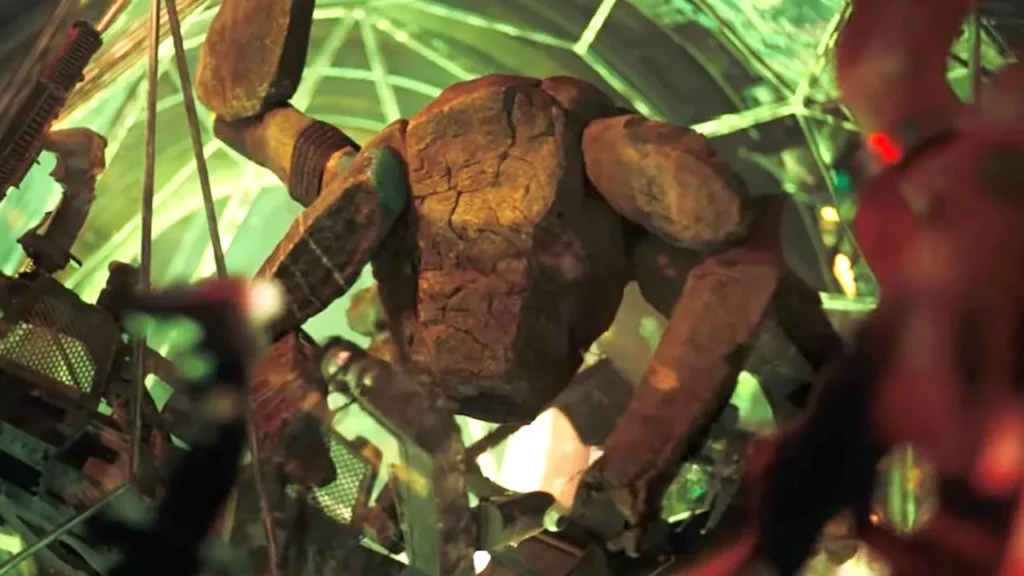
Lord and Miller encouraged 45-minute improvised takes between Gosling and Ortiz, almost like a theatre production. That creative freedom produced real results. Gosling’s favourite line in the finished film — “Rocky hate Mark” — was entirely improvised during one of these sessions, a throwaway joke aimed at a crew member standing next to the camera. It made the final cut. In another endearing touch, Gosling’s daughters would occasionally get on the earpiece between takes and play the voice of Rocky, something Gosling has spoken about in interviews as helping him stay connected to the character’s warmth.
Ortiz was originally hired just to operate the puppet. The plan was to cast a more recognisable actor for Rocky’s translated voice in post-production. But after months of shooting, Lord and Miller realised Ortiz’s performance couldn’t be improved upon. They kept his voice. It was the right call. Rocky’s delivery — dry, loyal, slightly anxious — carries an authenticity that a celebrity voice-over would have smoothed away.
The technical ambition extends beyond Rocky. Fraser shot the film on ARRI Alexa 65 cameras with anamorphic lenses rotated 90 degrees to achieve the full 1.43:1 IMAX aspect ratio. Space scenes — roughly three-quarters of the film — are presented in that tall, immersive format. Earth-based flashbacks drop to 2.39:1, the standard widescreen ratio. The effect in IMAX is striking: the present feels vast and open, and every transition to a flashback narrows the frame, visually compressing Grace’s memories into something smaller and more contained. It’s a clever piece of visual storytelling that most audiences won’t consciously notice but will absolutely feel.
No greenscreen was used anywhere in the production. The sets were built practically, with Gosling using wire rigging for zero-gravity sequences. Even the digital footage was transferred to celluloid film stock — two different stocks, in fact — and rescanned to give it analogue warmth and grain. Fraser used the same “film out” technique on Dune and The Batman. The result is a film that looks expensive without looking synthetic.
All of this matters because Project Hail Mary didn’t have to do any of it. A fully digital Rocky would have been cheaper and faster. Greenscreen would have simplified the production. But Lord and Miller understood that the entire film hinges on whether the audience believes in the friendship between a man and a rock, and that belief is easier to build when the rock is actually there in the room.
It’s also worth noting where this sits in the wider landscape. Project Hail Mary opened to $80.6 million domestically, making it only the second non-franchise, non-sequel film in the past decade to clear that threshold. The first was Oppenheimer. Combined with the success of Sinners last year — which became the highest-grossing original film of the decade domestically — and Pixar’s Hoppers performing strongly as an original property, the early months of 2026 are making a persuasive case that audiences aren’t just willing to show up for original stories. They’re hungry for them.
Should you watch it?
Yes. Project Hail Mary is the most complete crowd-pleasing film I’ve seen in a long time. It’s funny, it’s moving, and it looks extraordinary. If you have any interest in sci-fi, space, or stories about unlikely friendships, this is for you.
See it in IMAX if you possibly can. The aspect ratio shifts, the scale of the space sequences, and the sheer detail in Fraser’s cinematography are built for the biggest screen available. A standard screening will still land the emotional beats, but IMAX is where the craft becomes fully visible.
If you’re a parent, it’s also worth knowing this is a PG-13 film with genuine crossover appeal. It’s scientifically curious without being dry, and hopeful without being naive. Gosling has spoken about wanting to make a film his daughters could grow up with, and that intention shows.
The only people I’d steer away are those with zero tolerance for a slow-burn opening. The first act takes its time. But if you can settle in, the remaining two hours are some of the best blockbuster filmmaking in recent memory.
Frequently asked questions
Is Rocky CGI in Project Hail Mary?
Mostly not. Rocky was primarily a practical puppet built by creature designer Neal Scanlan and operated by puppeteer James Ortiz, who also provided the character’s translated voice. CGI from Framestore was used only for shots that were physically impossible to achieve with puppetry, such as Rocky rolling through the ship in a pressurised ball. All digital shots were built on top of the practical performance captured on set.
Is Project Hail Mary based on a book?
Yes. The film is based on Andy Weir’s 2021 novel of the same name. Weir also wrote The Martian. Drew Goddard, who adapted The Martian for Ridley Scott’s 2015 film, wrote the screenplay for Project Hail Mary as well. Weir served as a producer and was on set for the majority of the shoot.
How long is Project Hail Mary?
The film runs for two hours and thirty-six minutes. The majority of the runtime is set in space, with flashbacks to Earth filling in the backstory of how Ryland Grace ended up on the mission.
Is Project Hail Mary worth seeing in IMAX?
Absolutely. Roughly three-quarters of the film was shot in the full 1.43:1 IMAX aspect ratio, with Earth-based flashbacks presented in 2.39:1 widescreen. The shifts between aspect ratios are used as a storytelling tool — space feels expansive, memory feels constrained. Greig Fraser’s cinematography is built for the format, and IMAX is the way the filmmakers intended it to be seen.
Will there be a Project Hail Mary sequel?
Nothing has been officially confirmed, but author Andy Weir has publicly mentioned that he’s exploring sequel ideas. Given the film’s commercial success — over $420 million worldwide and climbing — a follow-up wouldn’t be surprising. Whether it continues Grace’s story or explores the wider universe Weir created remains to be seen.
Who voices Rocky in Project Hail Mary?
James Ortiz, the puppeteer who operated Rocky on set, also voices the character. The original plan was to replace his voice with a more high-profile actor in post-production, but directors Phil Lord and Christopher Miller felt Ortiz’s performance couldn’t be bettered. Ray Porter and Meryl Streep provided brief alternate voices for Rocky during a sequence where Grace tests different voice options for the translator.
- Release
- 15 March 2026
- Runtime
- 157 minutes
- Director
- Phil Lord, Christopher Miller
- Writers
- Drew Goddard
- Cast
- Ryan Gosling, James Ortiz, Sandra Hüller, Lionel Boyce, Milana Vayntrub, Ken Leung
Data and audience ratings from TMDB.

George Patient
George is the founder and editor of Merch Mates, writing about film, TV, gaming and the Disney parks.
You might also like
Project Necromancer In Star Wars, Explained

Star Wars: The Mandalorian and Grogu review

The 15 Most Powerful Non-Force Users in Star Wars, Ranked
All 9 Alien Movies, Ranked

The 10 Best Doctor Who Companions, Ranked (2005-Present)

The Top 10 Best Scariest Doctor Who Episodes, Ranked
Doctor Who’s Sutekh: Everything You Need to Know