All 5 Toy Story Movies, Ranked (Including ‘Toy Story 5’)
Five films, three decades, and one near-perfect ending. Here's where all five mainline Toy Story movies land, and where Lightyear fits.

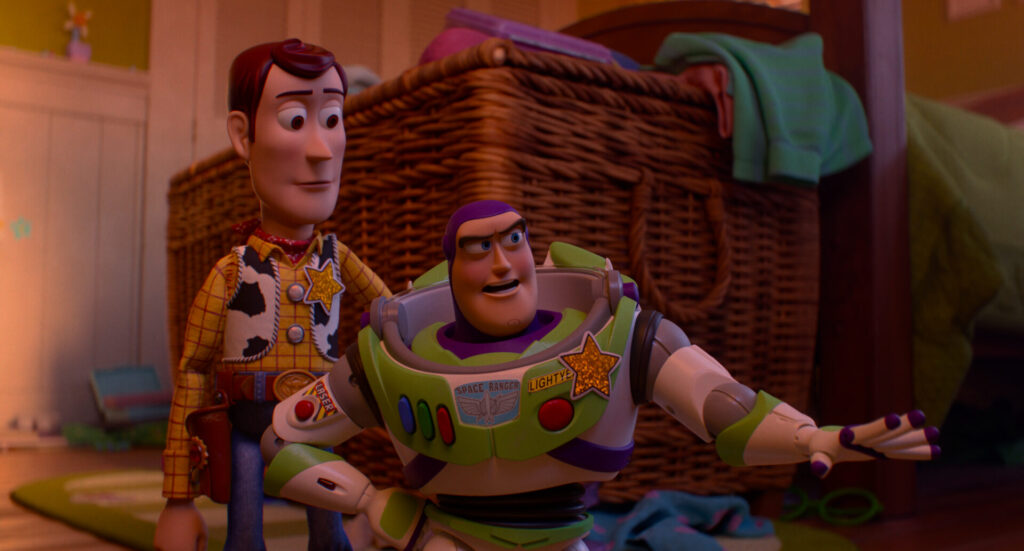
Pixar has now made five Toy Story movies across thirty years, and the striking thing is how few of them are bad. Most franchises that run this long have at least one entry everyone quietly agrees to forget. Toy Story doesn’t. Even the weakest film here is well-made and worth a Sunday afternoon. The distance between first and last is the distance between great and merely good, not between great and unwatchable.
So this ranking is about something narrower than quality alone: which of these films actually earned its place. Toy Story 3 closed Woody’s story so cleanly that everything after it has had to justify reopening a book that was already finished. Some of those returns were worth making. One of them wasn’t.
Here’s the order, worst to best: Toy Story 4, then Toy Story 5, the original, Toy Story 2, and Toy Story 3 at the top. Lightyear sits outside the main five as a spin-off, and picks up an honourable mention at the end.
5. Toy Story 4 (2019)
Josh Cooley’s 2019 entry is the hardest film here to rank, because nothing about it is bad. It won the Best Animated Feature Oscar, cleared a billion dollars at the box office, brought Bo Peep back as a genuinely reinvented character, and gave us Forky, a plastic spork having an existential crisis, which is a better gag than it has any right to be.
It lands last anyway, and the reason is the reason this whole list exists. Toy Story 3 had already given Woody a perfect goodbye with Andy. Toy Story 4 reopens the story to send him off a second time, and a second goodbye can’t carry the weight of the first.
The film is visually rich and frequently charming. It just never answers the question of why it needed to exist, beyond the fact that Toy Story 3 made a fortune. Woody’s final choice, walking away from Buzz and the gang to start a life with Bo, divided people precisely because the hands-held circle in the previous film already felt like the real farewell. A handsome, watchable film that came back for a story that didn’t need telling.
4. Toy Story 5 (2026)
The newest film had every reason to feel unnecessary, and almost none of that worry survives contact with it. Andrew Stanton directs, with McKenna Harris co-directing, and the smartest decision they make is structural: this is Jessie’s film. After two decades as the energetic second-tier favourite, she finally gets to lead, and Joan Cusack carries it with a warmth and vulnerability the series has never quite asked of her before.
The premise, a tablet named Lily threatening to make the toys obsolete, could have been a finger-wagging lecture about kids and screens. It isn’t. The film argues for balance and earns the argument, threading it through Jessie’s fear of being needed rather than bolting it on as a moral.
It opened to the biggest debut in the franchise’s history and holds a 93% critics score (at the time of writing), the lowest of the mainline run but remarkable for a fifth film. We gave it 9 out of 10 in our full Toy Story 5 review.
It sits above Toy Story 4 because it gave the franchise a real reason to come back. It sits below the top three because it’s working familiar ground, the fear of a toy being replaced.
3. Toy Story (1995)
Heresy to some, third for a reason. The 1995 original is the leanest of the great Toy Story films and the least emotionally ambitious, and that’s not a slight on a genuine landmark. This was the first feature-length film made entirely with computer animation, directed by John Lasseter, and it built Pixar into the studio it became.
As a film, it’s a near-perfect buddy comedy with a clean engine: Woody’s jealousy of the shiny new toy who doesn’t know he’s a toy. Buzz believing he’s a real space ranger is played for real comedy and a flicker of real horror, and the “falling with style” glide is one of the best gags in the series.
What it doesn’t yet have is the deeper register the sequels found, the one about mortality, abandonment and the day a child stops needing you. The original invented the toys. The films that followed worked out what they were really for. The animation looks its age now, three decades on, and that takes nothing away from how much it got right the first time.
2. Toy Story 2 (1999)
The one that proved the first film wasn’t a fluke. Toy Story 2 began life as a direct-to-video sequel and turned into something far better, the rare follow-up that deepened the original instead of repeating it.
It introduces Jessie, the Prospector, and the question that has powered every film since: what happens to a toy when the child grows up and moves on. The answer arrives in “When She Loved Me”, Jessie’s backstory montage scored by Sarah McLachlan, and it’s the moment the franchise grew up. Two minutes of a child outgrowing a toy, and Pixar discovered it could break adult hearts in a film made for kids.
Everything emotionally devastating about Toy Story 3 starts here. The Rotten Tomatoes consensus tends to rank this the best in the franchise, and the case is a strong one. It takes second here only because the next film took what Toy Story 2 discovered and built the perfect ending out of it.
1. Toy Story 3 (2010)
The perfect ending, and the reason the rest of this list is arranged the way it is. Lee Unkrich’s 2010 film sends Andy off to college and his toys, accidentally, to the brink of an incinerator, and it commits to that horror completely.
The furnace scene is the most frightening sequence Pixar has ever animated. The toys try to escape, fail, and then stop trying. They join hands and face the end together, calm, because there’s nothing left to do but be together. For a children’s film to go there, and to mean it, is extraordinary.
Then the film pulls back, and Andy hands the toys to Bonnie, and the series gets a goodbye that felt complete, earned and final. It won the Best Animated Feature Oscar and became the first animated film to pass a billion dollars at the box office.
This is the high point and the whole argument at once. Pixar made the perfect ending here, then spent the next fifteen years gently reopening it.
Honourable mention: Lightyear (2022)
Lightyear sits outside the ranking because it isn’t a Toy Story film in the way the other five are. The conceit is that it’s the in-universe sci-fi movie the Buzz Lightyear toy was based on, with Chris Evans voicing the “real” Buzz rather than Tim Allen’s action figure.
It isn’t a bad film. Angus MacLane’s 2022 feature is handsome and competently made, and the time-dilation hook, where minutes for Buzz cost his friends years, is a genuinely good idea. But it holds an 82% critics score, the lowest in the franchise, and underperformed badly against its budget at the box office.
The trouble is it never makes the case for why it needed Buzz Lightyear’s name on it. Strip out the branding and it’s a decent, forgettable space adventure.
Frequently asked questions
What is the best Toy Story movie?
Toy Story 3. The 2010 film built the franchise’s emotional peak around the incinerator scene and Andy’s goodbye, giving the series an ending so complete that every film since has had to justify reopening it. Toy Story 2 runs it close, but TS3 took what TS2 discovered and made the definitive farewell out of it.
How many Toy Story movies are there?
Five mainline films: Toy Story (1995), Toy Story 2 (1999), Toy Story 3 (2010), Toy Story 4 (2019) and Toy Story 5 (2026). Lightyear (2022) is a spin-off rather than a mainline entry, which brings the total Toy Story-universe films to six.
Is Toy Story 5 worth watching?
Yes. It hands the lead to Jessie, handles a timely screen-time theme with real nuance, and justifies its existence in a way few fifth films manage. We scored it 9 out of 10 in our full Toy Story 5 review. It doesn’t reach the emotional peak of Toy Story 3, but it comes closer than most expected.
Is Lightyear a Toy Story movie?
Technically it’s a spin-off, not a mainline Toy Story film. The premise is that Lightyear is the sci-fi movie that made the Buzz Lightyear toy a must-have in the first place, with Chris Evans voicing the on-screen hero rather than Tim Allen’s toy. It shares the universe but stands apart from the core five.
Will there be a Toy Story 6?
Nothing has been confirmed. Toy Story 5 wasn’t billed as a definitive ending the way Toy Story 4 was for Woody, and Pixar has not announced a sixth film as of mid-2026.

George Patient
George is the founder and editor of Merch Mates, writing about film, TV, gaming and the Disney parks.
You might also like

Candlelight: Disney Love Songs is coming to seven UK cities, from £15.50
Every Spider-Man Movie, Ranked Worst to Best
Toy Story 5 review – a heartfelt return to form
Best 20 Female Star Wars Characters

The 15 Most Powerful Non-Force Users in Star Wars, Ranked
The 20 Greatest Fictional Worlds Ever Built
20 Best Treehouse of Horror Episodes From The Simpsons, Ranked