From Hogwarts Houses to a Galaxy Far, Far Away: How Fans Wear Their Favourite Worlds
From Hogwarts house colours to the Rebel starbird, fandom fashion runs on small details that only fans will spot.

Guest feature, edited by Merch Mates.
View summaryHide summary
The biggest fictional worlds come with a visual language fans already know, from Hogwarts house colours and the Rebel starbird to Mickey Mouse’s three circles. That lets a single bag or pin read as an accessory to most people and as a message to anyone who shares the fandom. Fans then choose how obvious to be, anywhere between full cosplay, Disneybounding and one small symbol.
A Gryffindor scarf tells another fan that its wearer knows the Wizarding World and has picked a side within it. A Rebel Alliance pin on a denim jacket does the same job for Star Wars.
Fandoms have always produced things people want to own, and more of those things are now made to be worn. Clothing, trainers, jewellery and bags have become a way of carrying a fictional world into an ordinary day. Some of it is loud, and some of it would pass unnoticed by anyone outside the fandom.
Every fandom builds its own visual language
The biggest fictional worlds give fans a visual vocabulary as well as a cast of characters. Colours, symbols, costumes, creatures and small background details all become shorthand that fans pick up over years of watching and reading.
That gives licensed fashion plenty to work with. Collections available through the Loungefly shop show how a colour scheme, a shape or a single symbol can be enough to evoke a fandom. A design can point to a house, a faction or a character through details that are obvious to one fan and invisible to the person standing next to them.
Harry Potter turns houses into identity
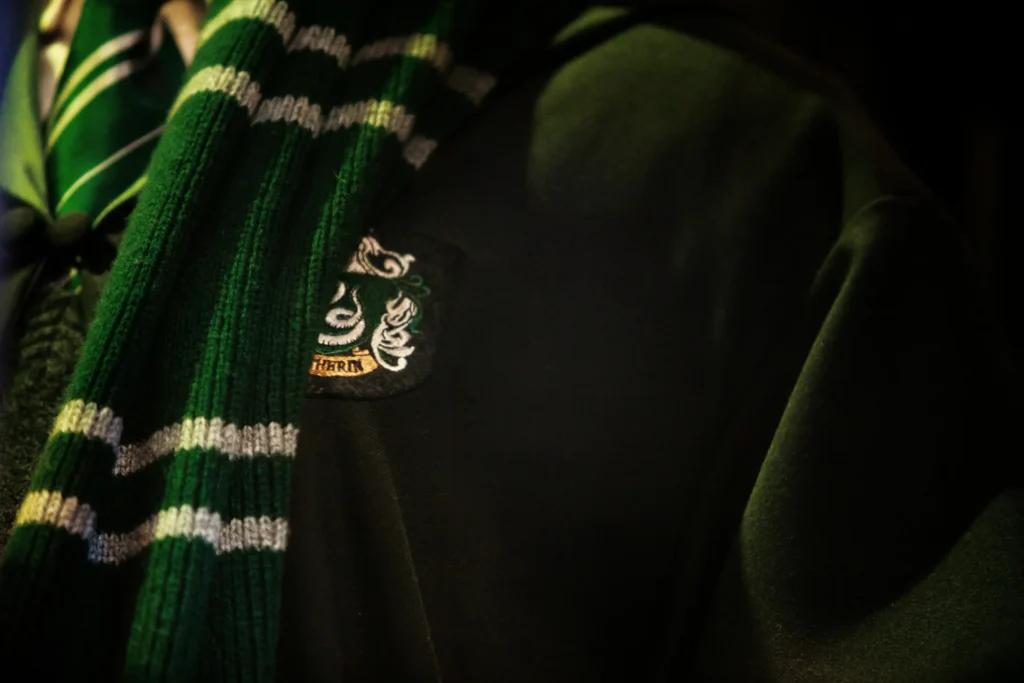
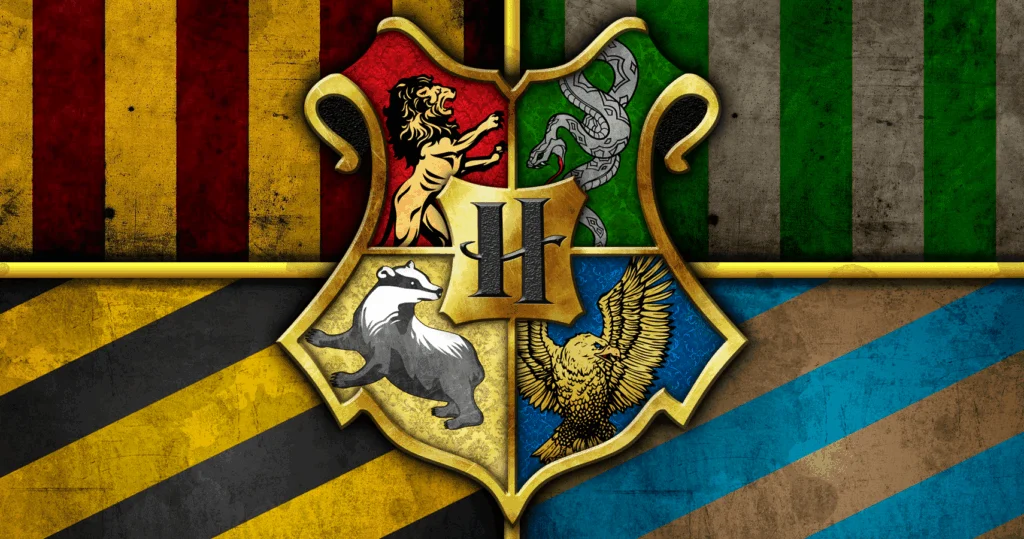
Few franchises show this as clearly as Harry Potter, where the four Hogwarts houses each have a complete visual identity in the books: scarlet and gold with a lion for Gryffindor, green and silver with a serpent for Slytherin, yellow and black with a badger for Hufflepuff, and blue and bronze with an eagle for Ravenclaw. The films swapped Ravenclaw’s bronze for silver, so both versions turn up on merchandise.
Each house also comes with a set of traits, and the traits are what turn a colour scheme into an identity. Sorting gives every new Hogwarts student a smaller community inside the school on their first night. The idea works equally well outside the fiction, where many Harry Potter fans can name their own house on the spot.
Star Wars builds meaning through factions and symbols
The wider Star Wars galaxy reaches the same result by a different route. Since 1977 it has built up a deep stock of shorthand, including the Rebel Alliance starbird, the Imperial crest, Mandalorian armour, Jedi robes and the outlines of its droids and ships. Any one of them identifies the franchise before the words Star Wars appear.
Colour does some of the work too. Darth Vader’s black armour sets one tone, and the orange flight suits of Rebel pilots set another. The detail gets more specific than that, and even the colours and plaques used to distinguish Imperial ranks carry meaning for fans who know the universe. That depth lets a product reference a faction, a planet, a character or one period of the story through a single small symbol.
Disney turns character details into instant recognition
Disney’s catalogue runs from classic animation to Pixar and the princess films, so its shorthand tends to come from individual characters. Mickey Mouse is the clearest case, because three circles are enough to identify him.
The same principle holds for other characters. A red bow with white polka dots reads as Minnie Mouse, and a particular colour combination or outline can do the same for a princess or a Pixar hero. Loungefly’s cosplay mini backpacks apply the idea to a whole bag, styling it after a single character.
One reference reaches two audiences
Any piece of fandom fashion has two audiences, and the first already knows the reference. A Harry Potter fan who sees green, silver and a serpent thinks of Slytherin at once. A Star Wars fan can identify the Imperial crest with no lettering beneath it.
The second audience sees an accessory and nothing more. Ordinary branded fashion rarely works on two levels like this, as a bag to most people and a message to anyone who shares the fandom.
That is where small details earn their value. Fans spend years learning the characters, places, symbols and histories of these worlds, and clothing gives that knowledge somewhere to go. Spotting a reference that everyone else has missed is part of the enjoyment.
Fans choose how obvious they want to be
Fan fashion runs along a scale, with cosplay at one end, where recreating a character’s look is the whole point. At the other end are references small enough to go unnoticed outside the fandom, and most everyday fan fashion sits somewhere between the two.
Disney fans have a name for the middle of that scale. Disneybounding means building an outfit from everyday clothes in a character’s colours. It suits the parks well, because Walt Disney World does not allow guests aged 14 or older to wear costumes.
The same fan might carry a bright character backpack to a convention and wear one small symbol to work, and another fan might do the reverse. Nobody has to dress as a Hogwarts student or walk around in Jedi robes to show which worlds they care about. A bag, a wallet, a pin or a piece of jewellery takes one recognisable fragment of Hogwarts or Tatooine and gives it a place in this one.

George Patient
George is the founder and editor of Merch Mates, writing about film, TV, gaming and the Disney parks.
You might also like

The 20 Greatest Fictional Worlds Ever Built

16 Best Fictional Characters Beginning With O

71 Best Star Wars Planets in the Galaxy

The 25 Best Movie Sequels of All Time, Ranked

Galaxy’s Edge At Disney World: A Comprehensive Guide
Galaxy’s Edge: Rise Of The Resistance
The 4 Hogwarts Founding Houses