Blade Runner 2049 Ending Explained
In 2017, cinema-goers were treated to a science fiction spectacle with the release of Blade Runner 2049.


As the sequel to the 1982 cult classic Blade Runner, this film takes viewers thirty years into the future of that dystopian world, introducing a new thread in the tapestry of a narrative known for its rich exploration of what it means to be human. Directed by the visionary Denis Villeneuve, the Blade Runner 2049 ending boldly tackles themes of memory, identity, and existence, charting a course through a labyrinth of moral and philosophical questions.
Set against the backdrop of a technologically advanced society where bioengineered beings known as replicants walk among humans, Blade Runner 2049 follows Officer K, a blade runner himself, who stumbles upon a secret that beckons him to uncover truths about his own identity as well as the mysterious past of Rick Deckard, the original blade runner. The film culminates in a climactic confrontation, leading to a physically and emotionally charged finale that resonates with the themes of sacrifice and redemption.

Key Takeaways:
- The film extends the universe of the original Blade Runner, probing deep philosophical questions about humanity’s essence.
- Officer K’s journey is central to the narrative, culminating in a selfless act that impacts the lives of key characters.
- Deckard’s arc concludes with an emotional reunion, providing closure to the longstanding mysteries of his past.
Who Is Officer K?
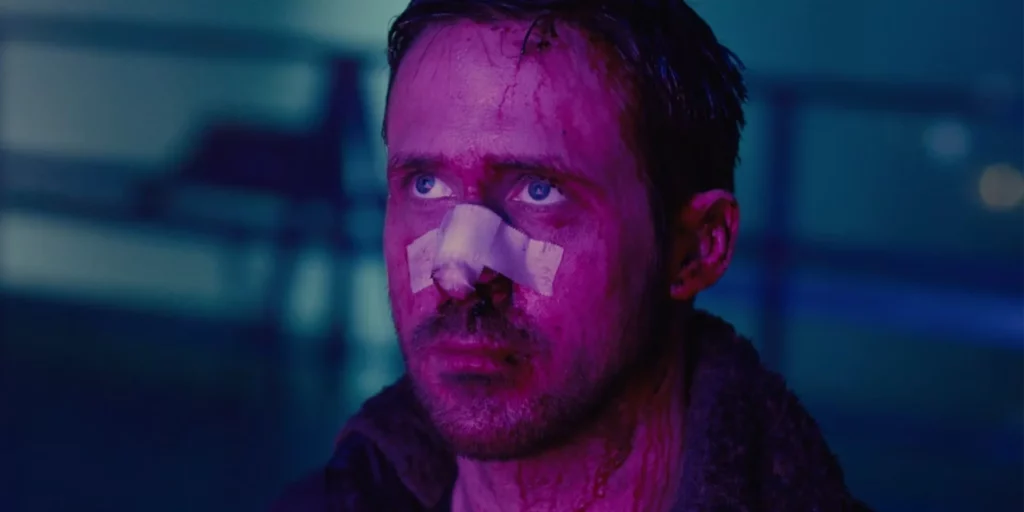
Occupation: Blade Runner for the LAPD
Real Identity: Nexus-9 replicant
Portrayed by: Ryan Gosling
Significant Other: Joi, an artificially intelligent hologram depicted by Ana de Armas
Notable Characteristics:
- Begins with a strong belief in following orders.
- Questions his existence and humanity.
- Discovers a critical childhood memory, raising personal doubts.
As a Blade Runner, K is tasked with retiring rogue replicants, which brings him scorn from humans and fellow replicants. Despite his synthetic origins, he embodies human traits like curiosity and empathy, prompting an existential quest. His journey intersects with notable figures such as Rick Deckard (Harrison Ford), former Blade Runner, and Niander Wallace (Jared Leto), head of the Wallace Corporation, which has succeeded the Tyrell Corporation in replicant production.
K’s relationship with Joi expands his understanding of affection and autonomy as he aspires to allow her to move independently. His investigative brinkmanship leads him to a significant discovery – a replicant reportedly born, not created, linked to a former Blade Runner, Deckard.
Key Revelations:
- An encounter with Dr. Ana Stelline, a memory curator, shakes his perception of self.
- Realises his memories are echoes of Stelline’s own, not genuine recollections.
In the film’s denouement, K’s humanity surfaces through his unselfish actions. His mission evolves from compliance to liberation, culminating in a poignant bid to unite Deckard with his offspring. K’s life, interspersed with challenges from figures like Luv and Morton and even subtle cameos like Gaff, underlines a crucial Blade Runner theme: the blurred lines between artificial life and human existence. His legacy is a testament to replicants’ evolving psyche, spotlighting the timeless conundrum of identity and existence within the Blade Runner universe.
Why Deckard Went Into Hiding

In the sequel to the classic science-fiction film, Deckard’s decision to seclude himself stems from a complex web of personal safety, the protection of his loved ones, and the tumultuous socio-political landscape he once navigated as a Blade Runner. Following the original film’s events, where Deckard’s involvement with the replicants left him with more questions than answers, including his own nature, he chose to vanish from the public eye to ensure the safety of the unique replicant Rachael and their daughter.
- Protecting his loved ones: Understanding that his daughter would be a target for various factions, including those who might wish to exploit or eliminate her, Deckard opted for separation to obscure her existence.
- Avoiding retribution: Deckard’s past actions had made him enemies, and his disappearance was a strategic move to prevent retribution against himself and Rachael.
- The Tyranny of the Wallace Corporation: The emergence of the Wallace Corporation, which aimed to dominate and control replicant technology, created a dire premise for all replicants. Going into hiding was perhaps the surest way to avoid their omnipotent reach.
It was revealed in Blade Runner 2049 that his withdrawal from society was part and parcel of a broader plan orchestrated by the Replicant Freedom Movement—hoping to secure a future where replicants are free from servitude and persecution. Deckard’s actions are deeply rooted in the themes of autonomy and resistance that permeate the Blade Runner universe.
Who is Dr. Ana Stelline?

Dr. Ana Stelline is esteemed as a memory designer for replicants. Her connection to two key figures is pivotal: she is Rick Deckard’s and Rachael’s progeny, a replicant. This unique heritage results in a compromised immune system, confining her to a sterile habitat away from the harsh atmosphere plaguing Earth.
Her work crafting artificial memories for replicants is delicately ironic, given her inability to experience the world beyond her glass confines. The character, portrayed by Carla Juri, encapsulates the film’s exploration of life’s delicacy amidst technological evolution. Dr. Stelline’s existence is a profound confluence of humanity and a replicant legacy, illustrating the intertwined destinies.
Blade Runner 2049 Ending – K’s Sacrifice
In the climactic sequence and profound ‘Blade Runner 2049 Ending’, K embraces his mortality, embodying a level of emotional depth and moral compass that transcends his synthetic origins. Though originally designed as a Nexus-9, devoid of the empathetic traits associated with humanity, K’s evolution throughout the narrative parallels a profound humanistic awakening.
His final act, marked by selflessness, casts aside the presumption that genetics alone prescribe identity. The suggestion woven into this narrative thread is that the essence of being human is an intricate tapestry interwoven with emotional intelligence. This standpoint challenges preconceived notions of being truly human, positioning K’s spiritual metamorphosis as a touchstone for the human condition.
The conclusion of K’s odyssey also ties back to the pivotal themes of fate and hope. The wooden horse, an object enshrouded in significance, symbolises these ideas, as it becomes a beacon, guiding K towards his epiphany of purpose and soul. His journey indicates a broader love story—not in the conventional sense, but as an allegory for the innate desire to find connection and purpose against the backdrop of an underground movement spearheaded by the character Freysa.
K’s journey is interlaced with his interactions with other characters, drawing into question the complex interplay between technology and the fabric of society. His decision to aid Deckard in reuniting with his child encapsulates a universal yearning for reconciliation and meaning. This narrative arc delivers a resolution for K and ignites a glimmer of optimism for the future.
The Blade Runner 2049 ending serves not merely as closure for a singular character but as an acute reflection on the nuances of personhood within such a dystopian reality. The baby, embodying hope and continuity, unifies the overarching motif that identity and humanity are multifaceted and not constrained by one’s origins. K’s sacrifice, thus, is emblematic of the broader quest for identity within the vast expanse of the human experience.
Frequently Asked Questions about Blade Runner 2049
The Importance of Blade Runner 2049’s Conclusion
The Blade Runner 2049 ending is significant because it finalises the journey of the main character, K, and sheds light on the overarching narrative of what it means to be human. The closing scene manages to provoke contemplation about self-sacrifice, the essence of humanity, and the power of individual purpose.
Connection Between Blade Runner Films
“Blade Runner 2049” succeeds the original “Blade Runner,” building on the world it established while also exploring the ethical and philosophical questions raised in the first film, such as the nature of consciousness and what differentiates humans from artificial beings.
Major Themes in Blade Runner 2049
The film investigates several profound themes:
- Identity: Examining what defines a person’s identity, whether it is their memories or actions.
- Real vs Artificial: Challenging viewers to discern and question the distinction between real and synthetic.
- Resistance and Survival: Showcasing the characters’ fight against oppression.
- Nature of Memory: Discussing the reliability and impact of memories on an individual’s identity.
Differences Between Replicants in Both Films
Replicants in “Blade Runner 2049” are advanced and designed to be more obedient than their predecessors. A notable difference is implementing a failsafe mechanism to prevent rebellions, contrasting with the first generation seen in the original film, which was prone to defiance.
Memory’s Role in Blade Runner 2049’s Story
Memories are pivotal in “Blade Runner 2049,” as they influence the characters’ beliefs and actions. The narrative deeply investigates the ambiguity of implanted versus genuine memories and how they shape the fundamental self.
Blade Runner 2049’s Exploration of Identity
“Blade Runner 2049” delves into identity through its characters’ search for purpose. The film questions what it means to possess an identity, especially within the bounds of artificial life and its implications on autonomy and authenticity.

George Patient
George is the founder and editor of Merch Mates, writing about film, TV, gaming and the Disney parks.
You might also like
The Greek mythology behind Christopher Nolan’s The Odyssey, explained
Star Wars: The Mandalorian and Grogu review
Project Hail Mary review — hopeful, inspiring and epic
Explained | Zootopia 2 Ending: What Comes Next?
In The Spotlight | AURORA: 10 Years, Five Albums, and a Voice for Humanity

The 15 Most Powerful Non-Force Users in Star Wars, Ranked
Who Are The Endless In ‘The Sandman’ Series? All 7 Siblings Explained