The Odyssey review: One of Nolan’s best

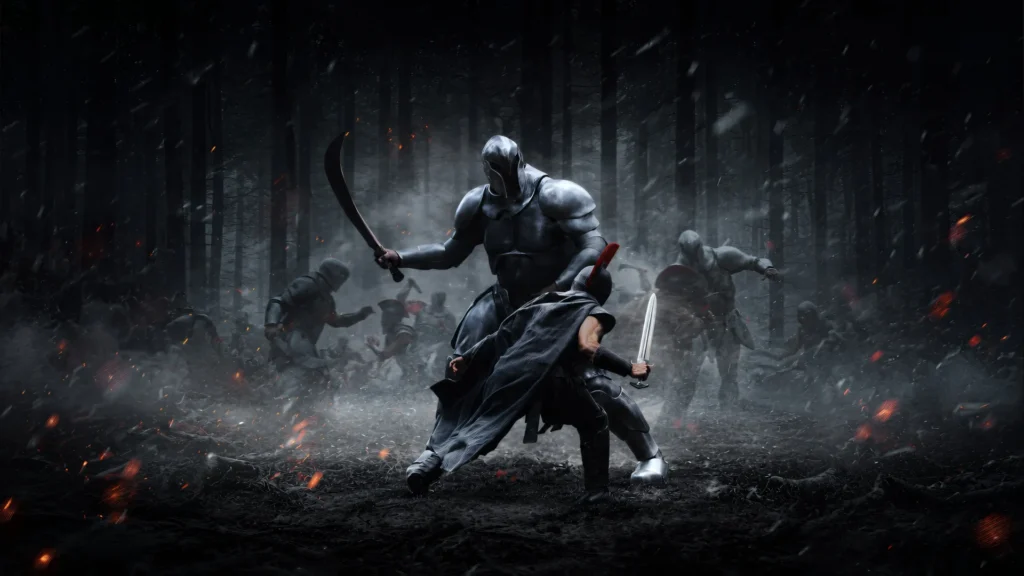
Matt Damon trying to get home again, only this time nobody is coming to save him.
Audience score3,757 ratings on TMDB
The Odyssey is the best film I’ve seen this year and one of the best things Christopher Nolan has made. I went in expecting to hold something back, the way you usually do with a Nolan film on one viewing, and I came out without a note.
It runs 172 minutes, it’s the first feature shot entirely on IMAX 70mm, and Matt Damon plays an Odysseus you spend three hours not being allowed to root for. See it on the biggest screen you can get to.
Matt Damon plays an Odysseus you are not allowed to root for
Damon strips out the winking heroism the character usually attracts. His Odysseus is charming and quick and very good at talking his way out of trouble, and almost every time he manages it, somebody else pays for it.
The sack of Troy is where that lands. Nolan stages it in flashback as a massacre rather than a victory and keeps returning to it, and Damon plays a man who has decided not to think about what he did. He holds that for three hours. Playing guilt would have been the easier job.
It’s the performance the whole film rests on, because everything around it is enormous and this is the small thing holding the middle together. Ludwig Göransson’s score does the rest. Nolan’s dialogue is spare and his cutting is restless, so most of the emotional continuity comes from the music, and without it the sea passages and the Ithaca material would sit apart like separate short films.
Robert Pattinson deserves more attention than the coverage has given him. He plays Antinous, the loudest of the suitors circling Penelope back in Ithaca, as an entitled young man who has convinced himself he’s owed something, and the final act needs somebody like that to push against. Anne Hathaway holds Ithaca together as Penelope, and Lupita Nyong’o plays both Helen and Clytemnestra, two women the story uses as opposite outcomes of the same war.
The Cyclops and Circe are the two sequences that stay with you
Polyphemus is the showpiece and it earns it. Nolan had a sixty-foot rig built inside Nestor’s Cave in the Peloponnese and shot the sequence in there, with Bill Irwin performing the Cyclops on set rather than the creature being added afterwards. Irwin is a stage clown by training, and that physical performance is a large part of why Polyphemus reads as a character rather than an obstacle.
Because the rig was really there, Odysseus and the Cyclops share the frame instead of being cut between, and you get the full IMAX height of it in a single shot. Nolan’s line on the sequence was that everything about it was aimed at imagining what this would be like in real life, and it plays exactly that way.
Samantha Morton’s Circe is the other one, and it’s the most frightening thing Nolan has directed. The crew’s transformation is staged as body horror and the camera stays on the mechanics of it instead of cutting away. Morton plays the whole scene with a flat domestic calm, like somebody tidying up, which makes it far worse. If you’re expecting fantasy whimsy from the pig sequence, you aren’t getting it.
The format is part of why both land. The film was shot entirely on IMAX 70mm using more than two million feet of stock, and the 172-minute runtime was capped by the physical limits of the projection rather than by the edit. The shoot ran 91 days across Morocco, Greece, Italy, Scotland, Iceland, Western Sahara and Malta, and wrapped nine days early.
The ending ties Odysseus to the end of the Bronze Age
The last movement does something no screen version of this story has tried. As Odysseus and his surviving men make their way home, the film ties them to the Sea Peoples, the raiders whose attacks across the Mediterranean line up with the Late Bronze Age Collapse, when palace civilisations from Mycenae to the Hittite empire fell apart inside a few generations. The cleverness that won Troy becomes part of what brings the whole world down.
Nolan doesn’t oversell it. Nobody stops to explain the connection and no line of dialogue spells it out. If you don’t know the history it plays as a bleak ending. If you do, it reframes everything before it.
He does the same with Zendaya’s Athena. She works as a goddess and a guide for most of the runtime, and the closing sequence leaves open the possibility that she has been a projection the whole time, a woman lost in the war whose memory Odysseus has built into something that still talks to him. The film never settles it. I read her as real, and read the ending as the point where Odysseus loses the ability to tell.
The boldest decision isn’t in Homer at all. Elliot Page plays Sinon, a character from Virgil’s Aeneid, recast here as the soldier who talked Troy into pulling the horse inside the walls, and Nolan brings him back in the underworld to ask Odysseus what he was used for. Page plays him bewildered rather than vengeful. He just wants an answer.
That’s the sort of liberty Emily Wilson objects to, and hers is the objection worth reading. Her 2017 translation is the most widely read English version of the poem, and she wrote a long piece in the London Review of Books calling the script abysmal, with no character given a convincing motivation. She’s right that this is Nolan’s Odyssey rather than Homer’s, and that the poem cares far more about hospitality and the rules of the household than the film has room for. I’d still take the Sinon scene over the fidelity. David Rooney at The Hollywood Reporter made the other case, that the episodic source impedes the film’s flow, and there’s something in it.
For once with a Nolan film, critics and audiences have landed in the same place. It’s on 95% at Rotten Tomatoes from 345 critics and 97% with audiences, plus 89 on Metacritic, all career highs, and it hit a million logged watches on Letterboxd in six days, faster than any film before it.
Should you watch it?
Yes, in a cinema, and soon.
Only 41 screens in the world can project true IMAX 70mm, and that number took some work. IMAX stopped manufacturing those projectors around fifty years ago, so getting from the thirty screens that showed Oppenheimer up to forty-one meant tracking down decommissioned units and rebuilding them. A lot of those bookings sold out weeks ahead.
If you can get to one, go. If you can’t, don’t let it put you off. I saw it in standard digital IMAX at Cineworld and the scale still landed, which is worth saying given how much of the marketing is about the format.
It’s a 15 here and an R in the States, and it has earned both. The Troy flashback includes the killing of women and children and implied sexual violence, and the Circe sequence is properly upsetting. This isn’t a family trip to see a Greek myth.
You don’t need to have read anything first. The film assumes you know roughly who Odysseus is and nothing past that.
How long is The Odyssey?
It runs two hours and 52 minutes. The runtime was capped just under three hours by the physical limits of IMAX 70mm projection rather than purely by editorial choice.
Who plays the Cyclops in The Odyssey?
Bill Irwin performs Polyphemus. Nolan shot the sequence inside Nestor’s Cave in the Peloponnese using a sixty-foot practical rig, so the scale you see in the frame was there on the day rather than added afterwards.
Who plays Circe in The Odyssey?
Samantha Morton plays Circe. Charlize Theron plays Calypso, the nymph who holds Odysseus on her island. The two roles get confused constantly in coverage of the film.
Is The Odyssey faithful to Homer?
Broadly, but with some big liberties. The major events of the poem are all there, but Nolan restructures them non-linearly, expands the Troy material into flashback, and imports Sinon from Virgil’s Aeneid, a character who doesn’t appear in Homer at all. The Sea Peoples ending is the film’s own invention.
What is the Sea Peoples ending in The Odyssey?
The film closes by linking Odysseus and his surviving men to the Sea Peoples, the raiders associated with the collapse of Bronze Age Mediterranean civilisations around the twelfth century BC. It reframes his victory at Troy as the start of a much wider catastrophe. Nolan presents the connection visually and never spells it out in dialogue.
Do you need to see The Odyssey in IMAX 70mm?
Only 41 cinemas worldwide can project the format, so for most people the question is academic. Standard IMAX and other large-format screens carry the scale of the Cyclops and storm sequences perfectly well. What you lose at home is the score and the sound design.
Is The Odyssey suitable for children?
No. It’s a 15 in the UK. The sack of Troy is staged as a massacre involving women and children, there’s implied sexual violence, and the Circe sequence is explicit body horror.
- Release
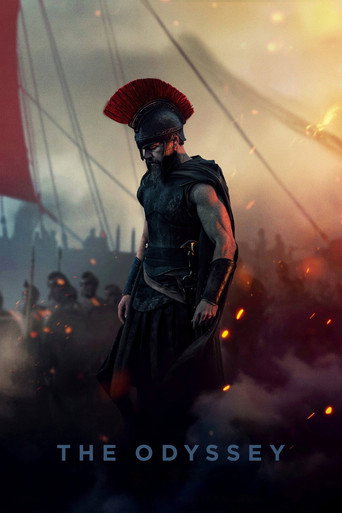
- 15 July 2026
- Runtime
- 173 minutes
- Director
- Christopher Nolan
- Writers
- Christopher Nolan
- Cast
- Matt Damon, Tom Holland, Anne Hathaway, Robert Pattinson, Himesh Patel, Charlize Theron
Data and audience ratings from TMDB.

George Patient
George is the founder and editor of Merch Mates, writing about film, TV, gaming and the Disney parks.
You might also like
Spider-Man: Brand New Day review – back at street level, where he belongs
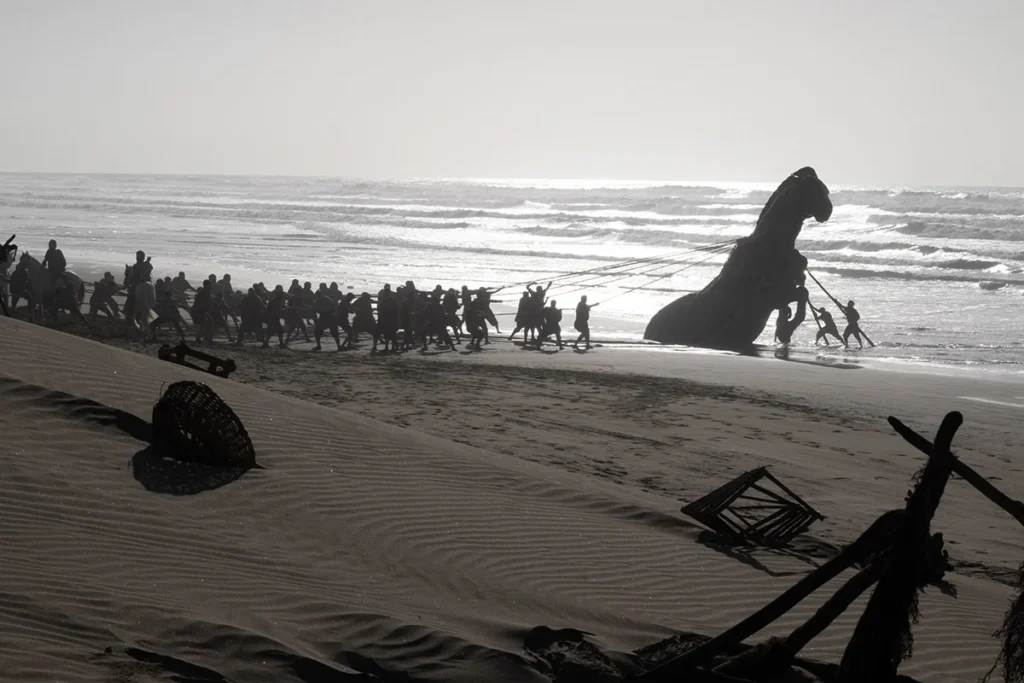
The Greek mythology behind Christopher Nolan’s The Odyssey, explained
Toy Story 5 review – a heartfelt return to form

Star Wars: Maul – Shadow Lord season 1 review
Inside Out 2 Review: Growing Up with New Emotions
Slow Horses Season 3 Review
Slow Horses Season 2 Review