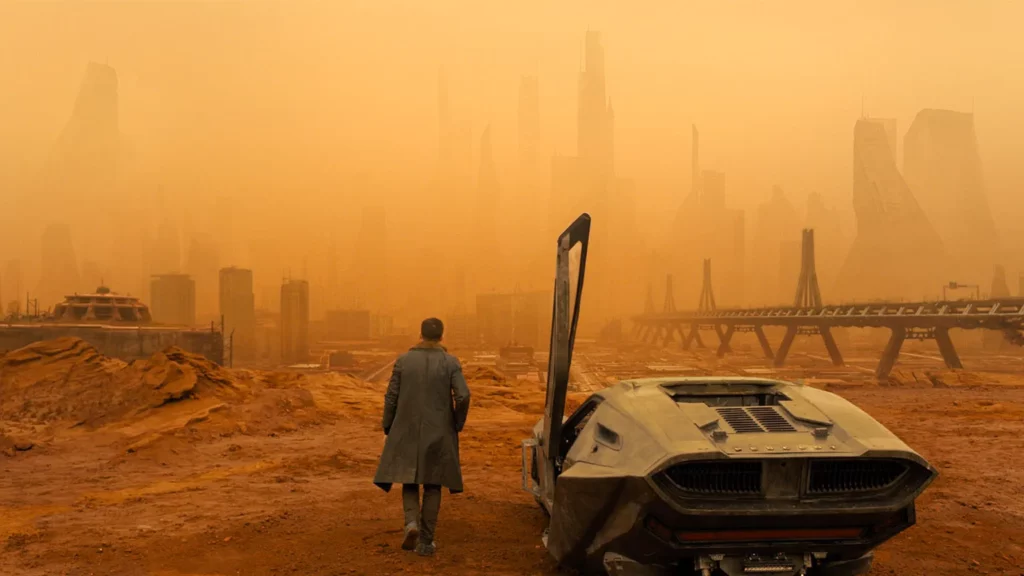
The Greek mythology behind Christopher Nolan’s The Odyssey, explained
A plain-English guide to the mythology underneath the film: who the gods are, why Odysseus spends ten years trying to get home, and what the monsters along the way actually mean.

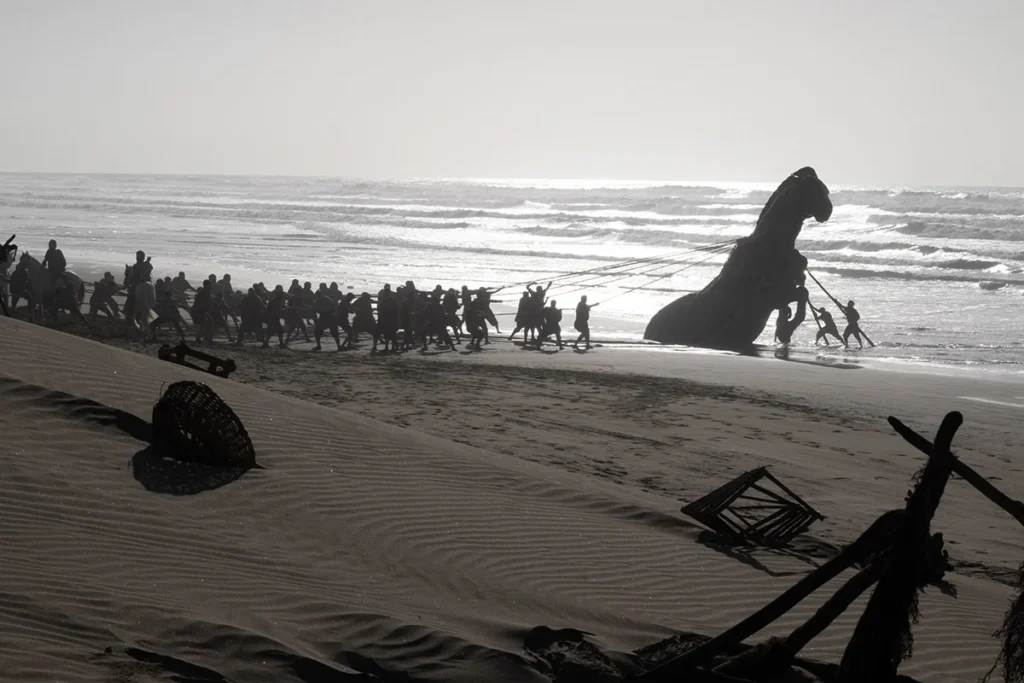
Christopher Nolan’s The Odyssey is the biggest film of the summer, and for many people watching it, it is also their first proper encounter with Greek mythology since school. The good news: you do not need a classics degree to follow it. You need a handful of gods, one very long war, and a hero who cannot stop making enemies of the sea.
This is a plain-English guide to the mythology underneath the film: who the gods are, why Odysseus spends ten years trying to get home, and what the monsters and temptations along the way actually mean. It works whether you have already seen the film or are saving your ticket. There are no spoilers here beyond Homer’s own text, which has been in circulation for about 2,700 years and is fair game by now.
Nolan has adapted Homer’s epic poem, drawing on Emily Wilson’s 2017 translation and the creature-feature spirit of Ray Harryhausen, with what he has described as a realistic interpretation of the myth. To understand the choices he is playing with, it helps to know the source. Here is everything worth knowing before, during or after the credits.
The Odyssey in one paragraph
The Odyssey is an ancient Greek epic poem, attributed to the poet Homer and composed roughly 2,700 years ago. It follows Odysseus, king of the small island of Ithaca, on his ten-year journey home from the Trojan War. While he is lost at sea, his wife Penelope holds their household together against a house full of suitors who assume he is dead, and his son Telemachus grows up without him. It is a story about home, endurance, cleverness and the long cost of war. It is also, conveniently for a filmmaker, packed with storms, monsters and gods.
The Trojan War: the backstory the film assumes you know
Odysseus is sailing home from a war, and the film expects you to know which one. The Trojan War is the decade-long conflict that sits behind The Odyssey, told in Homer’s other epic, The Iliad.
It starts, as these things do, with a wedding and an argument. A golden apple marked “for the fairest” is thrown among the goddesses, and three of them (Hera, Athena and Aphrodite) each claim it. A Trojan prince named Paris is asked to judge. Aphrodite bribes him with the love of the most beautiful woman in the world, Helen, and he chooses her. The catch: Helen is already married to Menelaus, the king of Sparta.
Paris takes Helen to Troy, the Greeks raise an army to get her back, and a ten-year siege follows. It ends with Odysseus’s most famous idea: the wooden horse. The Greeks pretend to sail away, leaving a giant hollow horse as a parting gift. The Trojans wheel it inside their walls, the soldiers hidden within climb out at night, and Troy falls. Odysseus wins the war with a trick, then spends ten more years trying to get home from it.
That is the set-up. Everything in The Odyssey happens on the way back.
The gods who actually matter
Greek mythology has a crowded roster, but the story really turns on a few key figures. These are the ones worth keeping straight.
Athena is the goddess of wisdom, warfare and strategy, and Odysseus’s great protector. She admires his cunning because it mirrors her own, and she works behind the scenes to help him and his son. In the film she is played by Zendaya. If you want a single relationship to track, track this one.
Poseidon is the god of the sea, and the reason the journey takes so long. Odysseus blinds Poseidon’s son, the Cyclops Polyphemus, and Poseidon spends the rest of the poem making the sea as hostile as possible. When a story is set almost entirely on the water, having the sea god as your enemy is a serious problem.
Zeus is the king of the gods, who sits above the squabbling and occasionally settles it. He is less a character than a final authority, the one who decides when Odysseus has suffered enough.
Hermes is the messenger god, the one who carries the gods’ decisions down to the mortals and hands Odysseus the odd piece of help at the right moment.
The thing to understand about Greek gods is that they are not distant or serene. They are petty, proud, and personally invested. They pick favourites, hold grudges, and meddle constantly. Odysseus’s whole ordeal is essentially a family argument between gods, with a mortal caught in the middle.
Nolan has been open that he found the gods the hardest part to solve, and that his way in was to think about how divinity would have felt to the people telling the story rather than how it would look on screen. “I became more interested in the idea that, to people in that period, evidence of gods was everywhere,” he has said, describing the realisation as a significant creative breakthrough.
The journey home: the monsters and temptations
The heart of The Odyssey is the voyage itself, a series of encounters that test Odysseus in different ways. Some are monsters. Some are temptations, which are often the harder test. Here are the ones that matter most.
The Lotus-eaters. Odysseus’s crew land among people who eat a lotus fruit that erases all desire to go home. It is the first temptation of the journey and the gentlest: the danger is not death but forgetting. A few of his men taste it and have to be dragged back to the ship.
Polyphemus the Cyclops. The most famous episode. Odysseus and his men are trapped in the cave of a one-eyed giant, a son of Poseidon, who starts eating the crew. Odysseus escapes by getting the Cyclops drunk, blinding his single eye, and telling him his name is “Nobody”, so that when Polyphemus cries for help and says “Nobody is attacking me”, the other giants leave him to it. The escape is pure Odysseus: clever, ruthless, and just a little too pleased with itself. Taunting the blinded giant on the way out is what earns him Poseidon’s lasting anger.
Circe. A goddess and enchantress who turns Odysseus’s men into pigs, then, once he resists her magic, becomes an ally and a lover. He stays with her for a year. Circe is the point where the journey stops being about monsters and starts being about the pull of comfort and delay.
The Sirens. Creatures whose song is so beautiful that sailors steer onto the rocks to reach them. Odysseus wants to hear it and survive, so he has his crew plug their ears with wax and tie him to the mast, ordering them not to release him whatever he does. It is the definitive image of wanting a dangerous thing and building a system to survive your own desire.
Scylla and Charybdis. A pair of hazards on either side of a narrow strait: Scylla, a six-headed monster on the cliff, and Charybdis, a whirlpool that swallows the sea. Passing between them means losing some of the crew to Scylla or all of the ship to Charybdis. This is the origin of the phrase “between a rock and a hard place”, and the moment Odysseus has to choose the lesser of two catastrophes.
The underworld. Odysseus sails to the edge of the world to consult the dead prophet Tiresias about how to get home. It is the quietest passage in the poem and the strangest: he speaks to fallen comrades from Troy, and to his own mother, who died while he was away and whose death he learns of only there. Greek myth returns to this journey again and again, most famously with Orpheus, who went down for love and looked back.
Calypso. A nymph who keeps Odysseus on her island for seven years, offering him immortality if he will stay and forget Ithaca. In the film she is played by Charlize Theron. Calypso is the last and largest temptation: not a monster to outwit but a comfortable, endless life to refuse. Odysseus turns down eternity to go home to a mortal wife and an ordinary kingdom, which is, in the end, the whole point of the poem.
By the time Odysseus reaches Ithaca, he has lost his entire crew and everything he set out with. What waits for him at home is a different kind of battle, and the one the film builds towards, so we will leave it there.
Who’s who: the cast and their mythological figures
Nolan has assembled one of the most stacked casts of his career. Here is who plays whom, and which figure from the myth they are bringing to the screen.
Matt Damon as Odysseus, the king of Ithaca: soldier, sailor, liar, survivor. The most human of Greek heroes, defined by his mind rather than his muscle.
Anne Hathaway as Penelope, his wife, who spends twenty years fending off suitors with wit and patience, never certain her husband is alive.
Tom Holland as Telemachus, their son, who was a baby when Odysseus left for Troy and is a young man searching for his father as the story begins.
Zendaya as Athena, the goddess steering events in Odysseus’s favour.
Charlize Theron as Calypso, the nymph who offers him immortality.
Lupita Nyong’o as Helen of Troy and Clytemnestra, a dual role Nolan confirmed in May 2026. It is a smart piece of casting for anyone who knows the myth: Helen and Clytemnestra are sisters, married to the brothers Menelaus and Agamemnon, and their two stories are the mirror image of Penelope’s. One wife leaves and starts a war. The other kills her husband when he comes home from it. Penelope waits twenty years and does neither.
Robert Pattinson as Antinous, the most aggressive of the suitors camped in Odysseus’s home.
Jon Bernthal as Menelaus, the Spartan king whose wife’s abduction started the Trojan War.
Benny Safdie as Agamemnon, Menelaus’s brother and the Greek commander at Troy.
Samantha Morton as Circe, the enchantress who delays the journey by a year.
Bill Irwin as Polyphemus, the Cyclops whose blinding earns Poseidon’s grudge.
James Remar as Tiresias, the blind prophet Odysseus travels to the underworld to consult.
John Leguizamo as Eumaeus, the loyal swineherd who shelters Odysseus on his return.
Himesh Patel as Eurylochus, Odysseus’s second-in-command and the crewman most willing to argue with him.
Mia Goth as Melantho and Elliot Page as Sinon round out a cast deep enough that several genuinely significant figures from the poem are played by people who would headline most other films.
The stories from behind the camera
Part of the fun of a Nolan production is how it comes together, and this one has already produced some good stories.
The best concerns the casting of Athena. Tom Holland was the first of the pair to meet Nolan, and during that meeting the director asked, “Would you be offended if I asked Zendaya to play Athena?” Holland said he would be honoured and offered to pass the message along himself. Rather than simply tell her, he went home and handed her the script. “I just said to her, ‘You should read the script again’,” he told Access Hollywood. “I said, ‘Just trust me. You should read it again, read Athena, like, really closely’.” His account of what happened next: “The little corners of her mouth went up. It was amazing.” Holland has separately called the script the best he has ever read.
Then there is Nolan’s famously exacting set. Speaking on Brittany Broski’s Royal Court, Matt Damon and Anne Hathaway laid out the director’s unofficial commandments for the shoot as a set of mock rules. “Thou shalt not sit down. There are no chairs on set,” per Damon. “Thou wilt be fed. However, lunch shall not linger,” per Hathaway. And, from Damon again, “Thou shalt not watch playback. Because there shall be none.”
The one that got the most attention was Hathaway’s “Thou shalt not wear Uggs.” Damon’s explanation was that “he hates Uggs. I think they just symbolize leisure in a way he’s not comfortable with.” Nolan gave his own version of it on CBS Mornings a few days later, and it was less about leisure than immersion: such things “can actually, weirdly, take you out of reality,” he said, comparing it to eating crisps just off camera. “You want to stay in the moment.”
How faithful is Nolan’s version to Homer?
Nolan has been open that this is an interpretation, not a transcription. He read Emily Wilson’s acclaimed 2017 translation, the first by a woman into English, alongside the older E.V. Rieu and Robert Fagles versions, and has cited Ray Harryhausen, Andrei Tarkovsky and Akira Kurosawa as influences on the look and feel. Wilson’s translation strips away centuries of flowery convention and renders the poem in fast, direct language, and Harryhausen, the stop-motion pioneer behind the creatures of Jason and the Argonauts, signals that the monsters are being taken seriously as physical threats.
Nolan’s own framing of the problem is worth quoting: “Translation always, necessarily, involves interpretation.” Every version of The Odyssey in English is already someone’s reading of it. His film is one more. It is the same instinct that runs through the rest of his filmography, and through the Dark Knight trilogy in particular: take a story people think they already know, and rebuild it from the frame up.
What the classicists think
Adapting a text this old means adapting into an argument, and the argument has duly arrived. Since release, several of the scholars closest to the poem have taken issue with the film, and Emily Wilson, whose translation Nolan drew on, has been among the most pointed.
Wilson has criticised the absence of Zeus and Poseidon as active presences, a diminished Penelope, and what she considers a muddled position on war and cowardice. Her central objection is about Odysseus himself. Homer calls him polutropos, a word meaning something like “many-turning” or “of many devices”, and Wilson’s argument is that the film’s hero is not required to be clever. “Matt Damon isn’t required to be intelligent, to be scheming,” she has said, describing the result as closer to a traumatised Jason Bourne than to Homer’s tactician.
The translator Daniel Mendelsohn has gone further, saying the film’s Odysseus has “no cleverness, no humor, no wily charm.”
Wilson has been fair about the wider point, noting that reinventing Homer is a tradition older than the novel and that Virgil was doing it two thousand years ago. But if you go in knowing one thing about Odysseus, know that his defining quality is his mind, and that the question of whether this film keeps it is the live argument among the people who know the poem best.
That is a useful thing to have in your pocket, whichever side you land on.
And the numbers
None of the above has dented the film commercially or with audiences. The Odyssey is Nolan’s best-reviewed film, sitting around 95% with critics and 97% with audiences, both career records, and had taken roughly $639m worldwide by the end of its second weekend. It also became the fastest film ever to reach a million logged watches on Letterboxd. Shot entirely on IMAX cameras, it belongs in the conversation with the most visually ambitious films ever made.
Frequently asked questions
Do I need to read The Odyssey before watching the film?
No. The film tells the story in full. Knowing the Trojan War set-up (why Odysseus is at sea) and the main gods (Athena helping him, Poseidon hindering him) is enough to follow everything comfortably, and this guide covers both.
Is The Odyssey based on a true story?
Not in any literal sense. It is a myth, composed roughly 2,700 years ago. There may be a distant kernel of a real Bronze Age conflict behind the Trojan War, and cities like Troy did exist, but the gods, monsters and ten-year voyage are legend, not history.
Who is Odysseus?
Odysseus is the king of Ithaca, a Greek commander at the Trojan War, and the hero of the poem. He is famous for his intelligence rather than his strength: the wooden horse was his idea, and he talks and tricks his way out of most of his troubles. Matt Damon plays him in the film.
What is the difference between The Iliad and The Odyssey?
Both are epic poems attributed to Homer. The Iliad is set during the Trojan War itself. The Odyssey is the sequel, following Odysseus’s ten-year journey home after the war ends. Nolan’s film adapts The Odyssey.
Who does Lupita Nyong’o play in The Odyssey?
Lupita Nyong’o plays two roles: Helen of Troy, whose departure for Troy starts the war, and Clytemnestra, Helen’s sister and the wife of Agamemnon. Nolan confirmed the dual casting in May 2026.
Is the film a sequel or connected to anything?
No. The Odyssey is a standalone adaptation of Homer’s poem. It shares no universe with Nolan’s other films and requires no prior viewing.

George Patient
George is the founder and editor of Merch Mates, writing about film, TV, gaming and the Disney parks.
You might also like
The Odyssey review: One of Nolan’s best
Spider-Man: Brand New Day review – back at street level, where he belongs
Explained | Zootopia 2 Ending: What Comes Next?
Doctor Who’s Sutekh: Everything You Need to Know
Top 10 Best Zendaya Movies And TV Shows, Ranked
Project Necromancer In Star Wars, Explained
All 80 Star Wars Creatures, Explained